Keep Social Media Social: 5 Tips for Horse Businesses That Actually Work
October 7, 2026


Raise your hand if you’ve ever opened Instagram, stared at it for ten minutes, and closed it without posting a thing.
Yeah. Same.
If you run a horse business, social media can feel like a second full-time job you never applied for. You’re feeding, riding, hauling and answering client texts. Somewhere in there you’re supposed to be a content creator too.
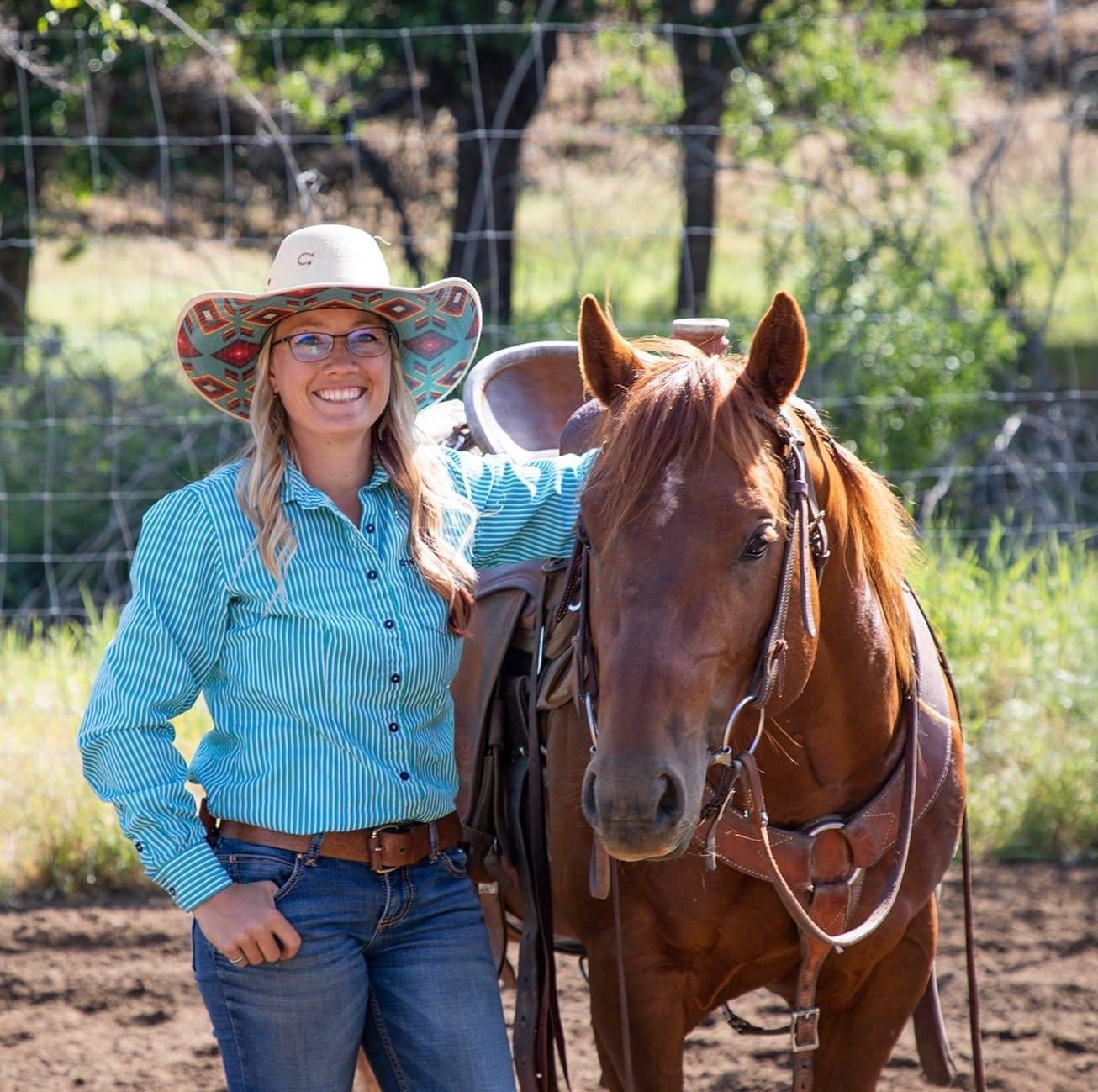
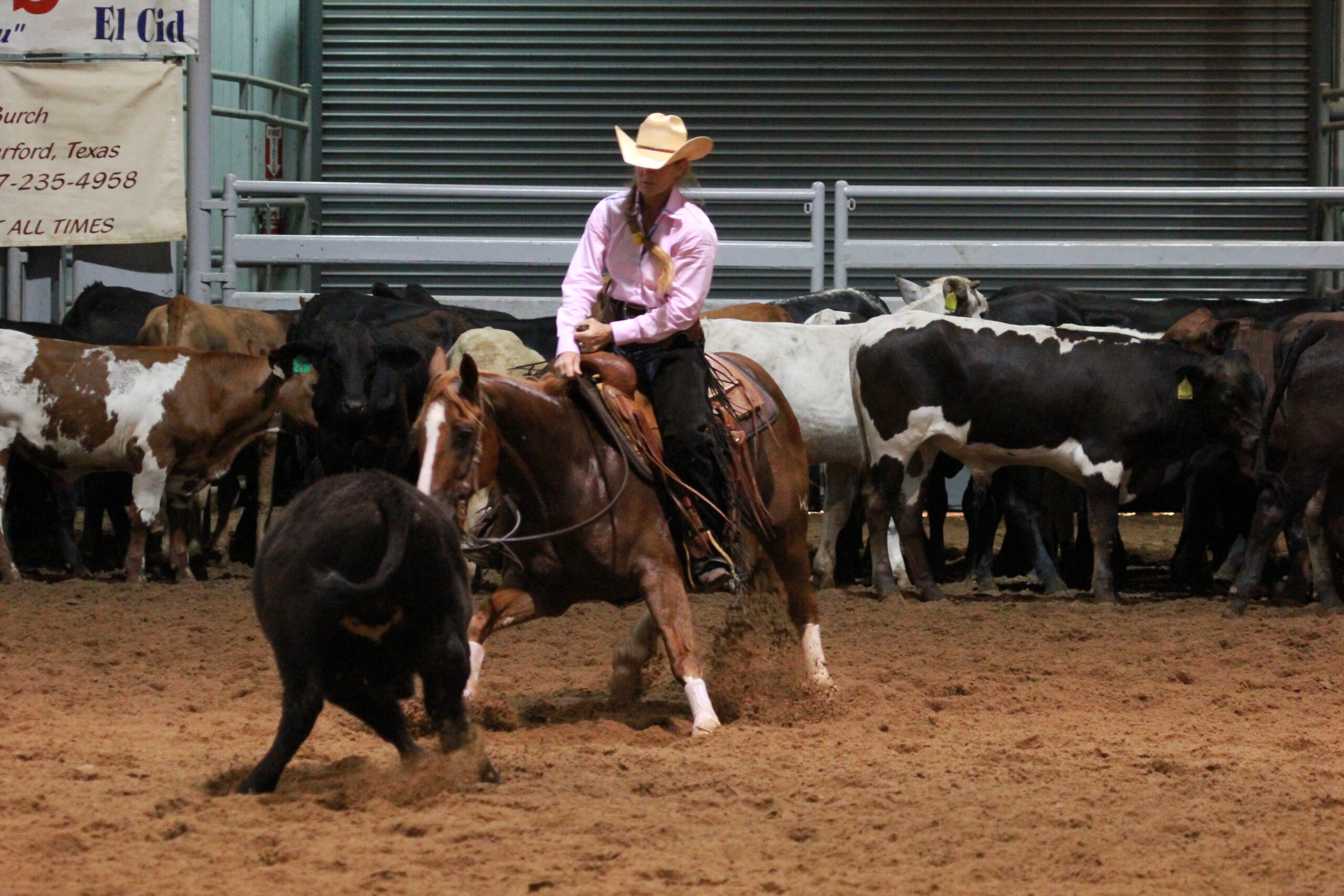
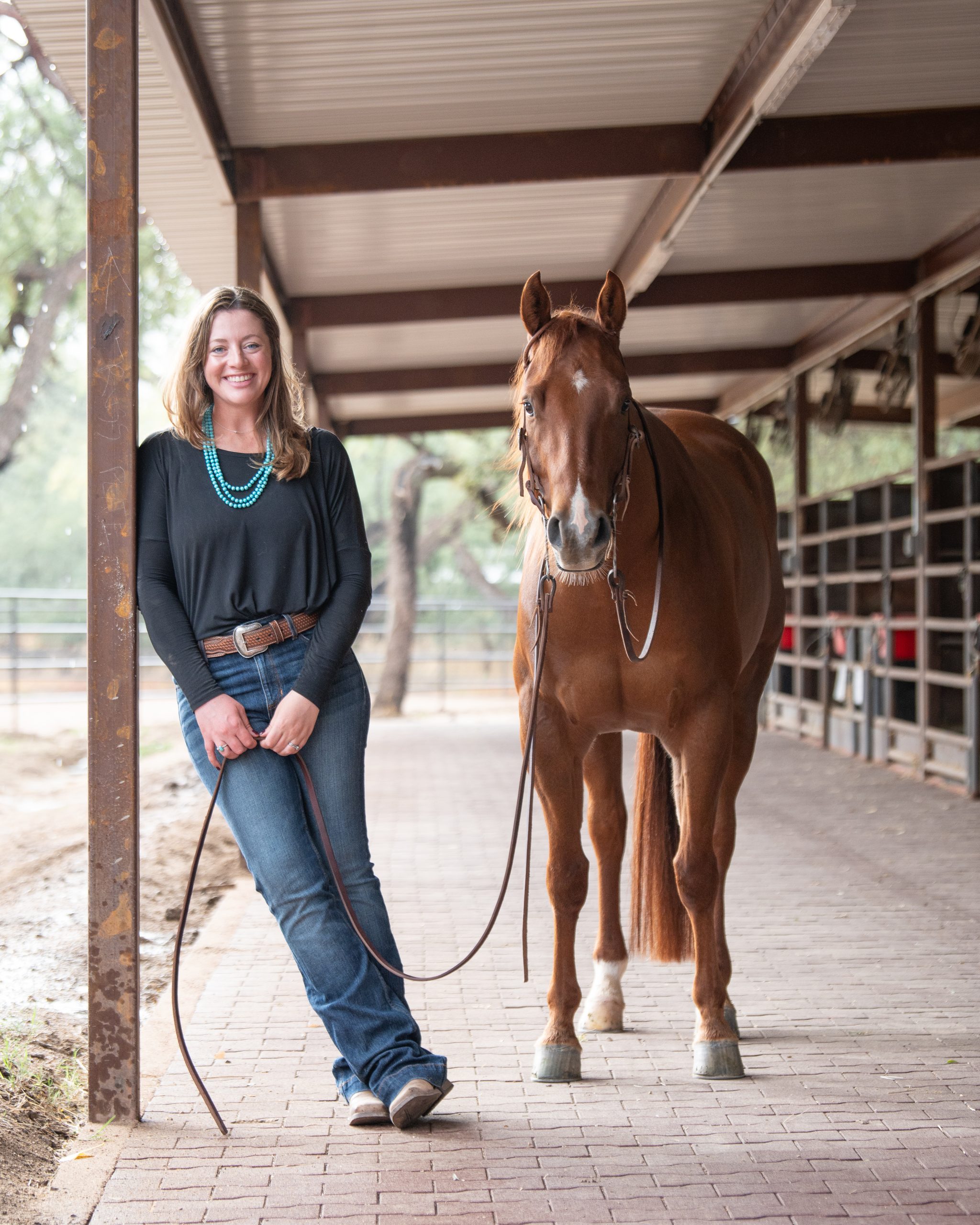
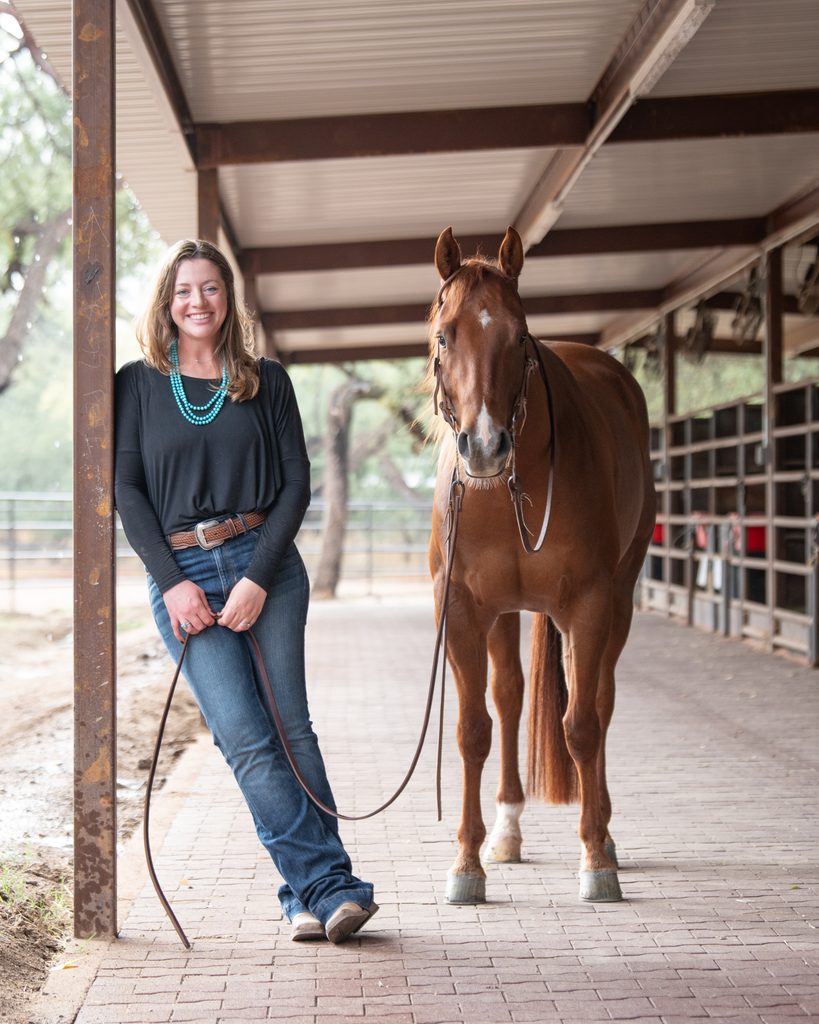
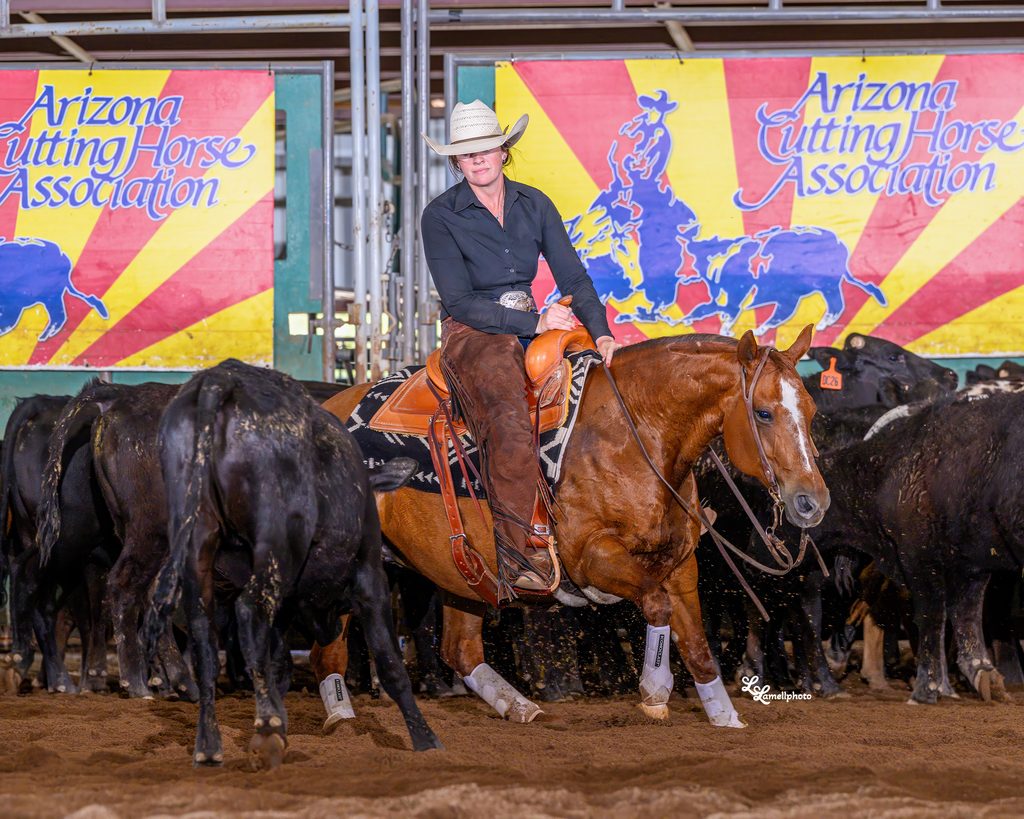
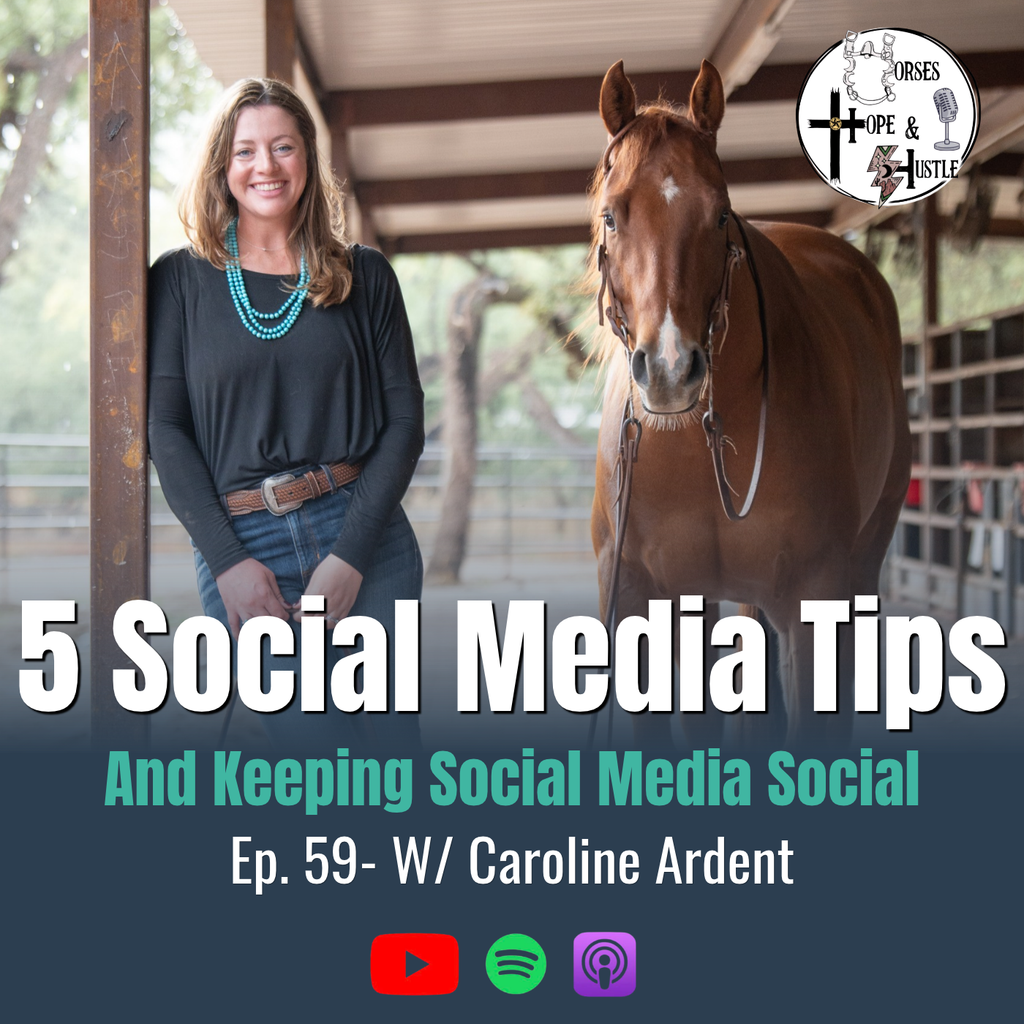
That’s why I brought Caroline Arendt onto the podcast. Caroline owns Caroline Arendt Creative, a social media marketing firm that works mostly with horse, Western and agriculture clients. She’s spent about seven years doing this, most days from her mobile office in her horse trailer. She’s also a lifelong horse girl and amateur cutter, so she gets it.
Her whole philosophy fits in four words: keep social media social. Here are the five social media tips for horse businesses we talked about, plus why your personal brand goes deeper than your logo, and what to know if you want to make social media your career.
Tip 1: Consistency doesn’t mean constantly
You don’t need to post five times a day. Caroline would rather see one or two posts a week that actually feel like you than a pile of posts made just to fill the feed.
Her reasoning is simple: Western people can smell BS. If your posts feel forced, your audience can tell. If they feel consistent, people start to recognize your stuff before they even see your name.
Try the 80/20 plan. Plan about 80 percent of your content for the week or month. Leave the other 20 percent open for the good stuff that just happens, like a two-year-old that finally slid, a first check, or a funny moment at a show. Hop on a trend only if it actually fits you.
Watch engagement, not followers. Caroline’s point here stuck with me. Comments, shares and messages matter way more than your follower count. If you sell horses, a share or a message about a sale horse is worth more than a pile of new followers who never engage.
And if you only have a handful of followers? Those people chose to follow you. If you have one person following you, you’re influencing one person. Learn who they are, whether that’s a busy amateur or a retiree, and talk to them like real people.
Tip 2: Stop worrying about the perfect post
We all want a pretty feed. But waiting for the perfect photo, the perfect caption and the perfect posting time is how weeks go by with nothing posted.
Caroline doesn’t get hung up on the “best time to post” either. Check your insights, skip the 3 a.m. posts, and then post when it works for you. Your audience is different from everyone else’s anyway.
Cell phone content is winning right now. Caroline loves a slow-motion 4K shot as much as anyone, but she’s seeing raw cell phone videos connect better, for her and her clients. Honestly, I think AI has a lot to do with it. When everything starts looking too polished, people assume it’s fake and keep scrolling. A little imperfection reads as real.
Just make sure every post still tells people who you are, what you do, where you’re from and what you’re about. Picture someone stumbling onto your page for the first time. What would they learn?
How to find your insights. On Facebook, open your page and look for Meta Business Suite or the professional dashboard on the left side. On Instagram, go to your profile, then the menu, then insights. A business or creator account gets you the good stuff.
Caroline likes to give new clients 90 days before judging what’s working. Check in at 30 days, then look at the full picture at 90. I’m proof of why that matters. I manage four pages, and on my stallion’s page, reels take off. On the podcast page, graphics beat everything, even our clips. On my personal page, it’s the long, half-a-blog posts that get shared. Same person, four totally different audiences.
Tip 3: Your business is already content
This one called me out. In the horse industry, you already have the content. It’s horses, cattle, feed, fuel and every curveball in between. You just have to show it.
Caroline’s reframe: stop asking “what should I post today?” and start asking “what am I already doing today that I can show people?”
A few ideas if you’re stuck:
- Show a horse you’re working and what you’re working on
- Answer the question clients ask you every single week
- Explain a piece of equipment, or why you use it
- Share your signature thing, like how you start your two-year-olds
- Take people along on your stories, which Caroline says are seriously underused
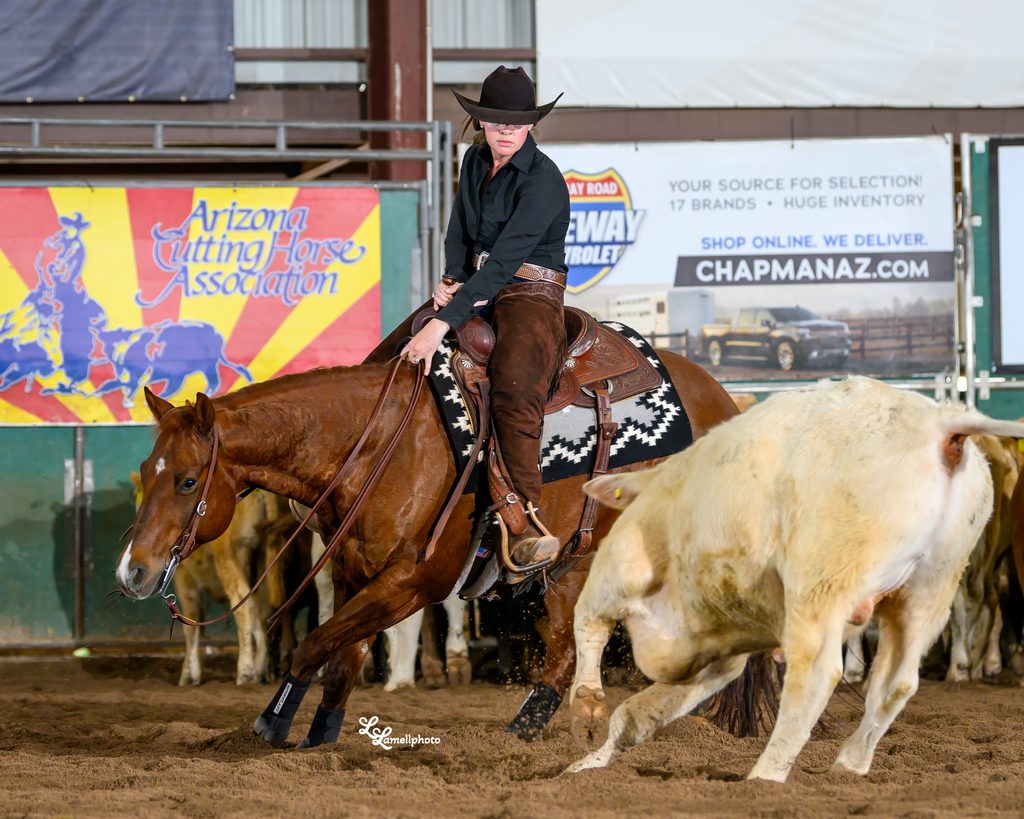
You don’t need a mirrorless camera. Your phone is plenty. Ask your spouse, assistant or barn buddy to grab a couple of quick clips, then add a caption or a voiceover explaining what you’re doing.
Think about how much people love day-in-the-life videos. The way you feed in the morning is probably different from how I do it, and that’s interesting to people. As Caroline put it, your business is content. You don’t have to manufacture a second life just for social media.
One honest reminder from both of us: social media is a highlight reel. Nobody posts the hard days, the losses or the client who was mad at them. So when you’re scrolling, use other people’s posts for ideas, not as a measuring stick.
Tip 4: Make it recognizable, not perfect
Brand consistency matters. Using the same colors, fonts and style helps people know it’s you at a glance. But don’t let that stop you from posting a cell phone photo, an old memory or a quick reshare.
Not every reel needs a fancy font transition. You’re running a business, not a full production studio. Caroline likes Instagram Edits and CapCut for quick edits, and something simple is always better than nothing.
Her rule: prioritize good content over perfect branding, every single time. Instagram compresses your video anyway, so there’s no prize for the most beautiful post.
And if a post flops? Don’t take it personally. The algorithm is weird. If something gets two likes, try something different next time.
Tip 5: Keep social media social
This is Caroline’s favorite, and it’s the thread through everything else. A lot of small businesses treat Instagram, Facebook and TikTok like a billboard: buy this, book me, hire me.
The brands that win have real people behind them. They reply to comments. They answer DMs. They actually care about the people following them. It doesn’t matter how many followers you have. If you’re being social, you’re using social media the way it was built to be used.
The connections are real, too. Caroline leaned into her brand in 2020, while everyone was isolating, and met a lot of people online. One interview led to a connection, which led to running social media for the PRCA at the NFR at Globe Life Field, and again at the Thomas & Mack the next year. All of it traced back to people she met on the internet.
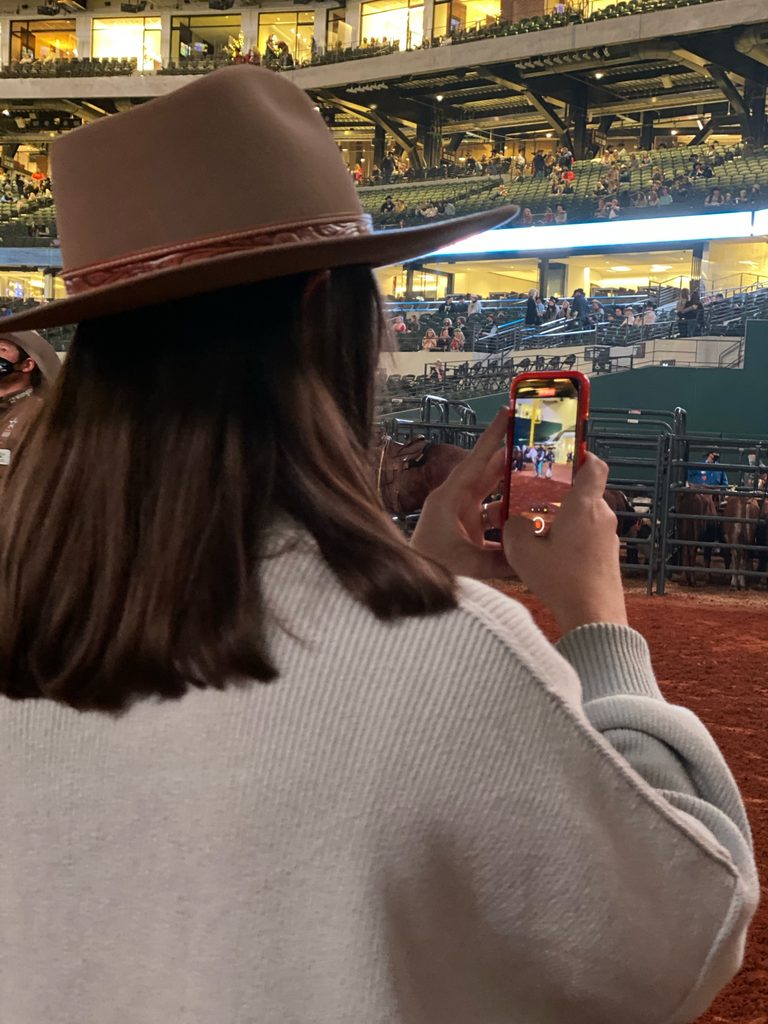
I’ve seen the same thing. Some of my biggest hype fans on Facebook are people I’ve never met in person. Some of our closest friendships came from this podcast, with people in Texas and Missouri. When we finally met face to face, it felt like we’d known each other forever.
Social media is just networking that doesn’t stop at the arena fence. You never know who’s watching, or who they know.
Your personal brand is deeper than your colors
I’ll admit it: I cheat on branding. I have Canva set up with my brand colors and fonts, and I love that system. It saves me time, and people know our graphics are ours.
But personal branding goes way deeper than colors and fonts. It’s people getting to know who you actually are.
If my stud pops up on someone’s feed, they know who he is instantly. Part of that is because he’s a very loud paint horse. Mostly, though, it’s how we post about him and the stories we tell. Once people know you, you can post your dog doing something funny and they’ll still know it’s you.
Caroline put it well: your strategy is your story. Branding is telling that story over and over in different ways, without wearing people out.
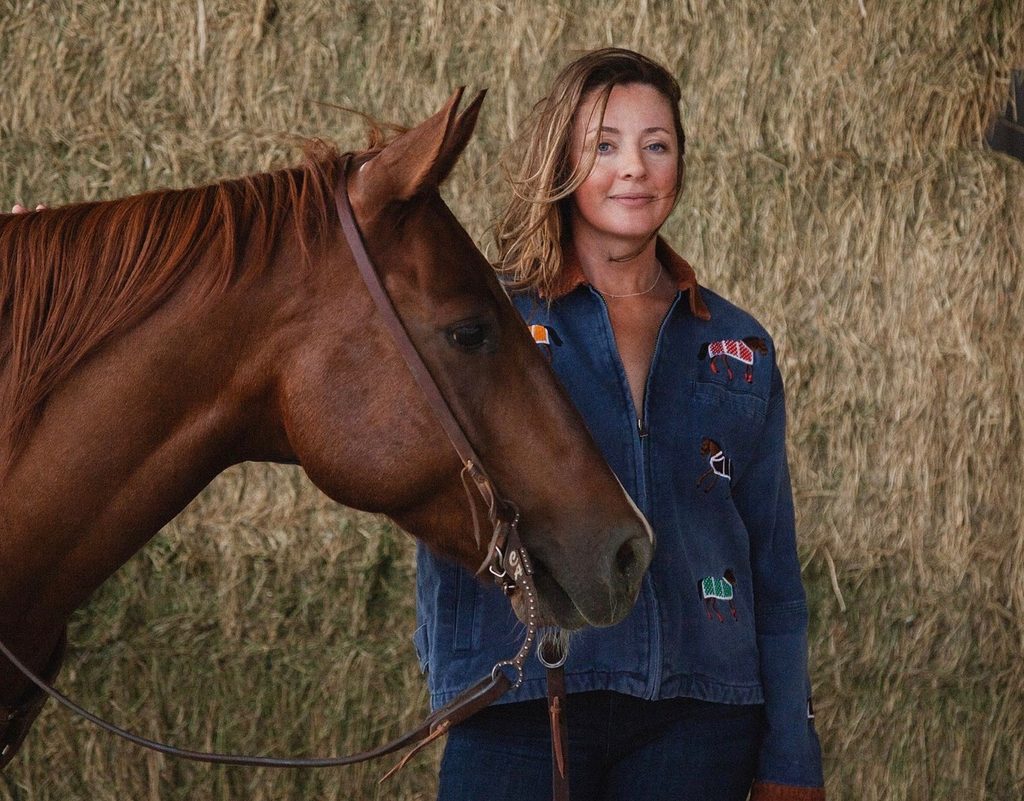
That can feel scary. You might worry about sounding conceited or stepping on toes. But the story only you can tell is the one that connects.
You never know who your story is going to reach. Put it out there anyway.
Thinking about a career in equine social media?
There’s so much room in this industry right now. A lot of horse businesses are great at what they do but don’t have the time or know-how for social media. Trainers train. Somebody else can post about it. That’s a real gap, and creative people can fill it.
Here’s Caroline’s roadmap if you’re thinking about it:
- Figure out what “social media” means to you. Posting? Shooting photos and video? Design? Ads? Managing it all? Lean into your strength. For Caroline, it’s storytelling.
- Build a portfolio. She started by running social media for an ag club in college. Friends and family who need help are a great place to start.
- Price yourself fairly, but don’t skip every unpaid opportunity. Caroline’s NFR gig came from a free interview she did. I volunteered to run social media and build a website for a cow horse association in Montana when I was on the board. That led to a paid position with another association, plus some incredible relationships. Someone in our VIP group said it best: opportunity equals value. Just don’t let yourself get taken advantage of.
- Learn marketing as a whole, not just social media. Read, listen to podcasts, and follow other industries. Caroline thinks the horse industry still runs about five years behind on marketing trends, so fresh ideas stand out.
- Know the industry you serve. Real passion and experience make your work authentic. Understanding your client’s story will get you further than captions written by ChatGPT.
- Learn to run a business. Working for yourself is freedom, and it’s scary. Your name is everything in this industry, and how you do anything is how you do everything.
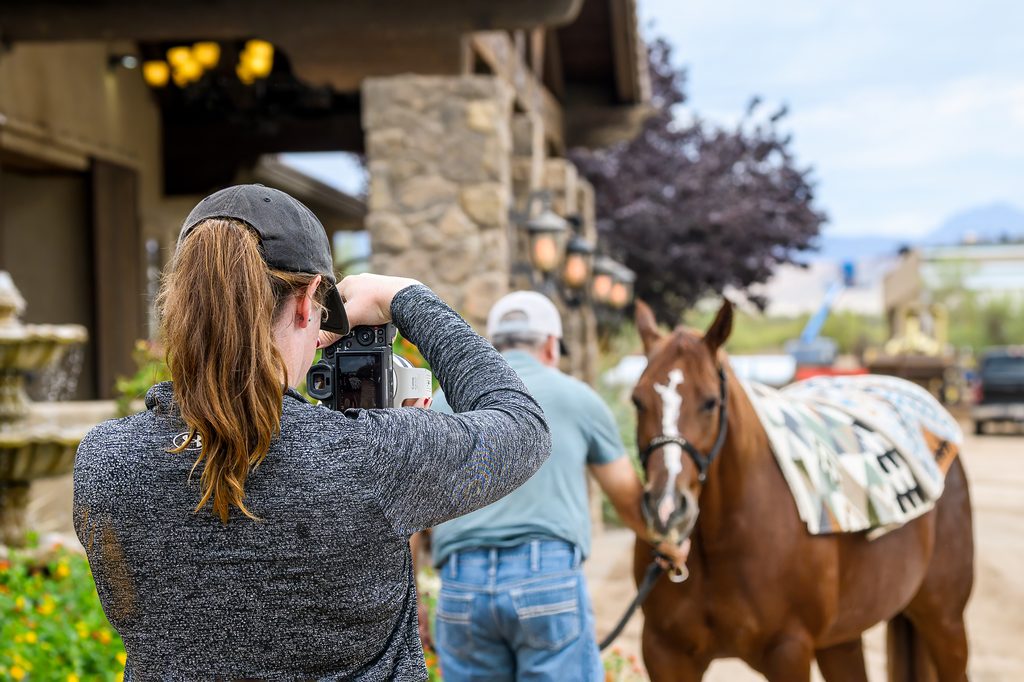
One last tip that hit home for both of us: keep a wins list. Caroline screenshots the kind texts clients send her. I have a photo album on my phone called “For the Hard Days.” Imposter syndrome is real, even years in. When it shows up, go read your wins.
Listen to the full episode
There’s a lot more in the full conversation, including MySpace and FarmVille flashbacks, the truth about the algorithm, and Caroline’s advice to her younger self.
Listen on Spotify, Apple Podcasts or YouTube.
Connect with Caroline: Find Caroline Arendt Creative on Instagram, TikTok and Facebook. She says she’s happy to answer questions in her DMs, so take her up on it.
Got a horse business? Make sure you’re listed in the Horses Hope & Hustle directory so horse people can find you.
Author: Crystal Show
share to
most popular posts