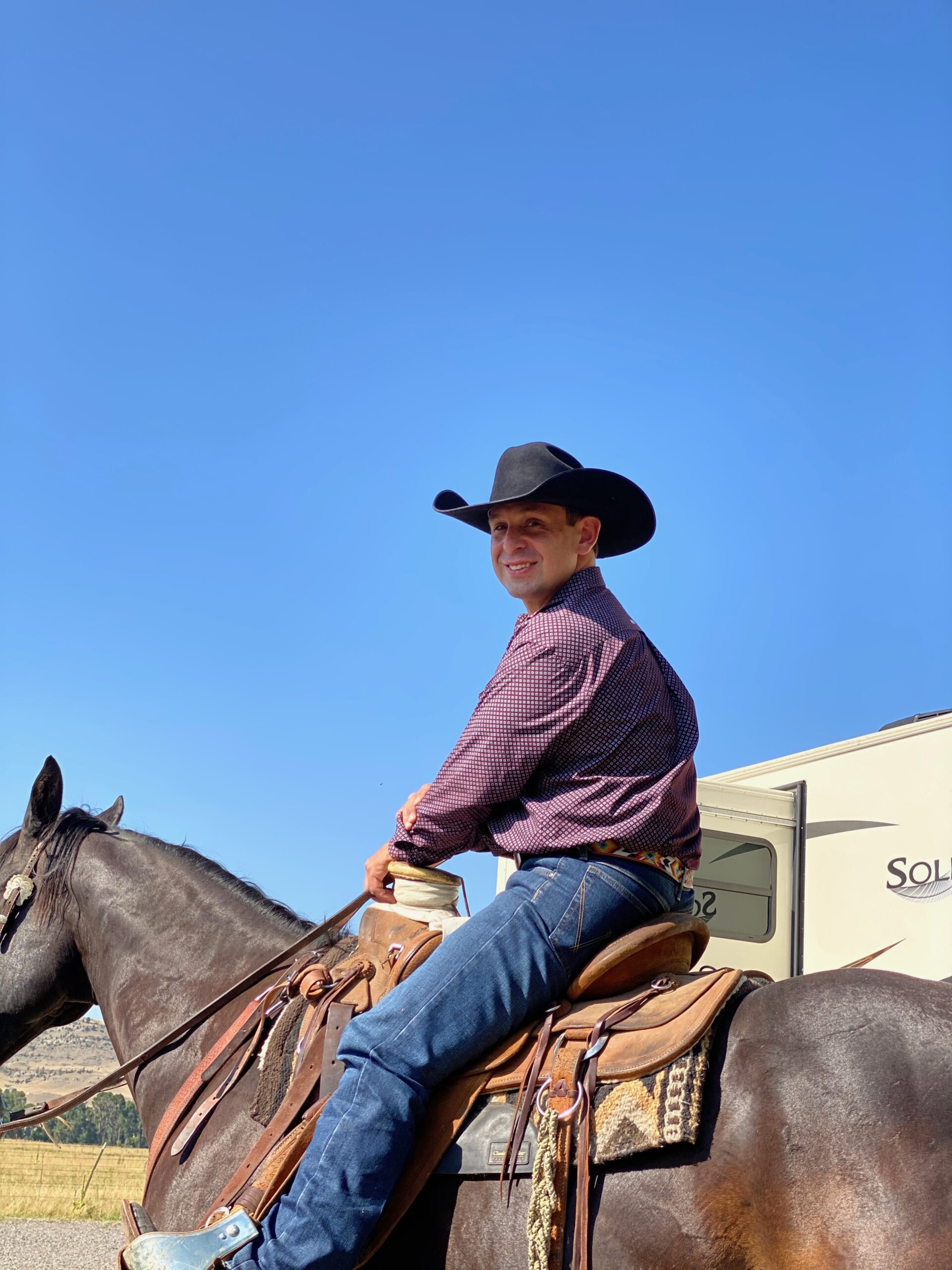


A Horses, Hope & Hustle Feature on Gardiner Quarter Horses
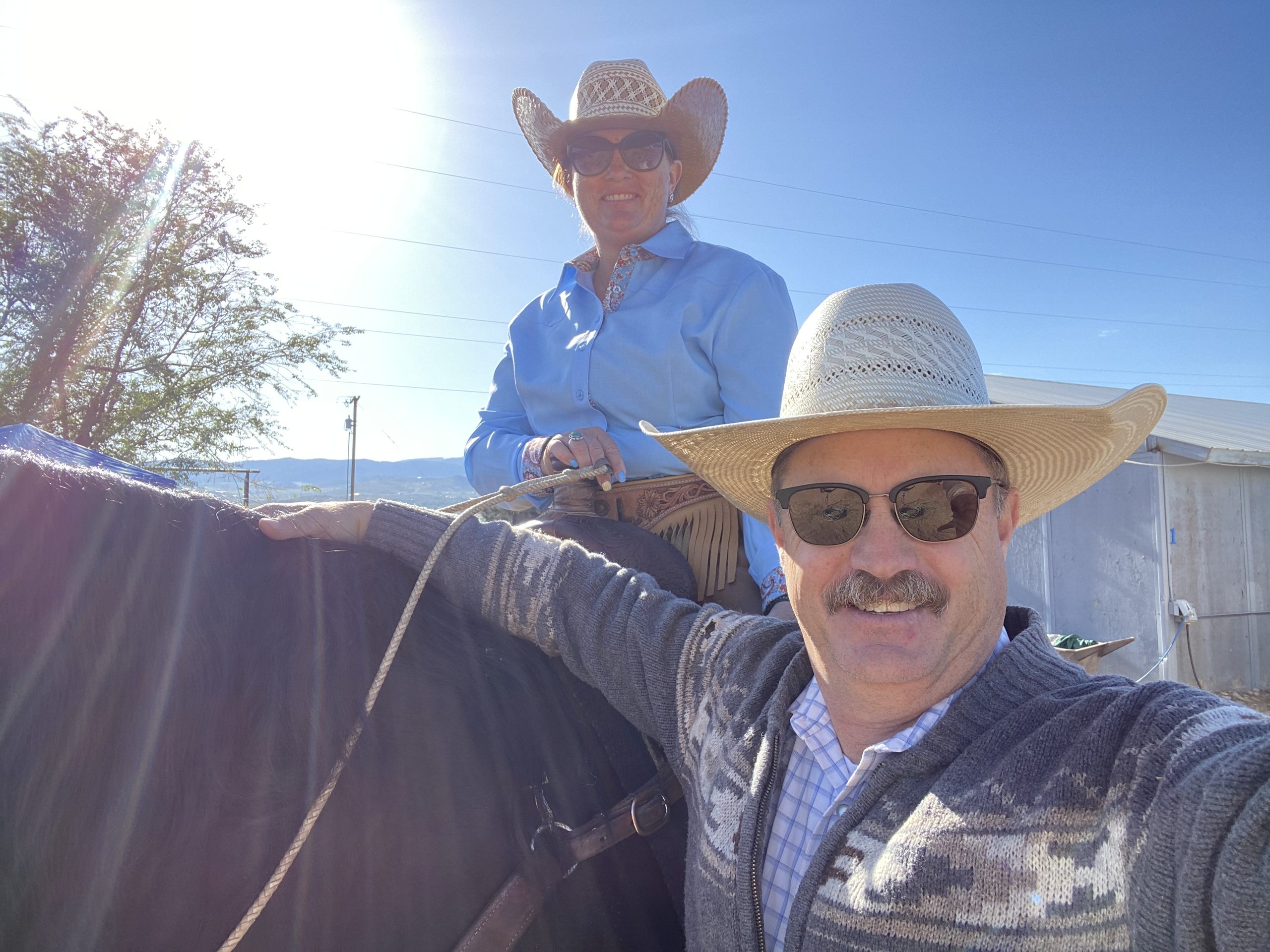
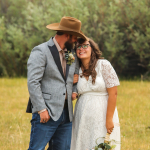
There’s a moment in every great origin story where two people who don’t know what they’re doing decide to try anyway. For Garth and Amanda Gardiner of Gardiner Quarter Horses, that moment happened at a random AQHA show in Tulsa – no romal reins, no chaps, no idea what a hackamore even was. Fast forward a couple decades, and the Gardiners are standing in front of an NRCHA crowd being recognized as Two Million Dollar Breeders — a club with only a handful of names in it, and names Garth still isn’t entirely comfortable being mentioned alongside.
We caught up with Garth on the road at the Montana Reined Cowhorse Futurity in Kalispell, where he was judging, to talk about how a couple of rope horse people accidentally built one of the most respected breeding programs in the reined cow horse industry.
It Started With a Girl, a Horse, and a Rope Horse Habit
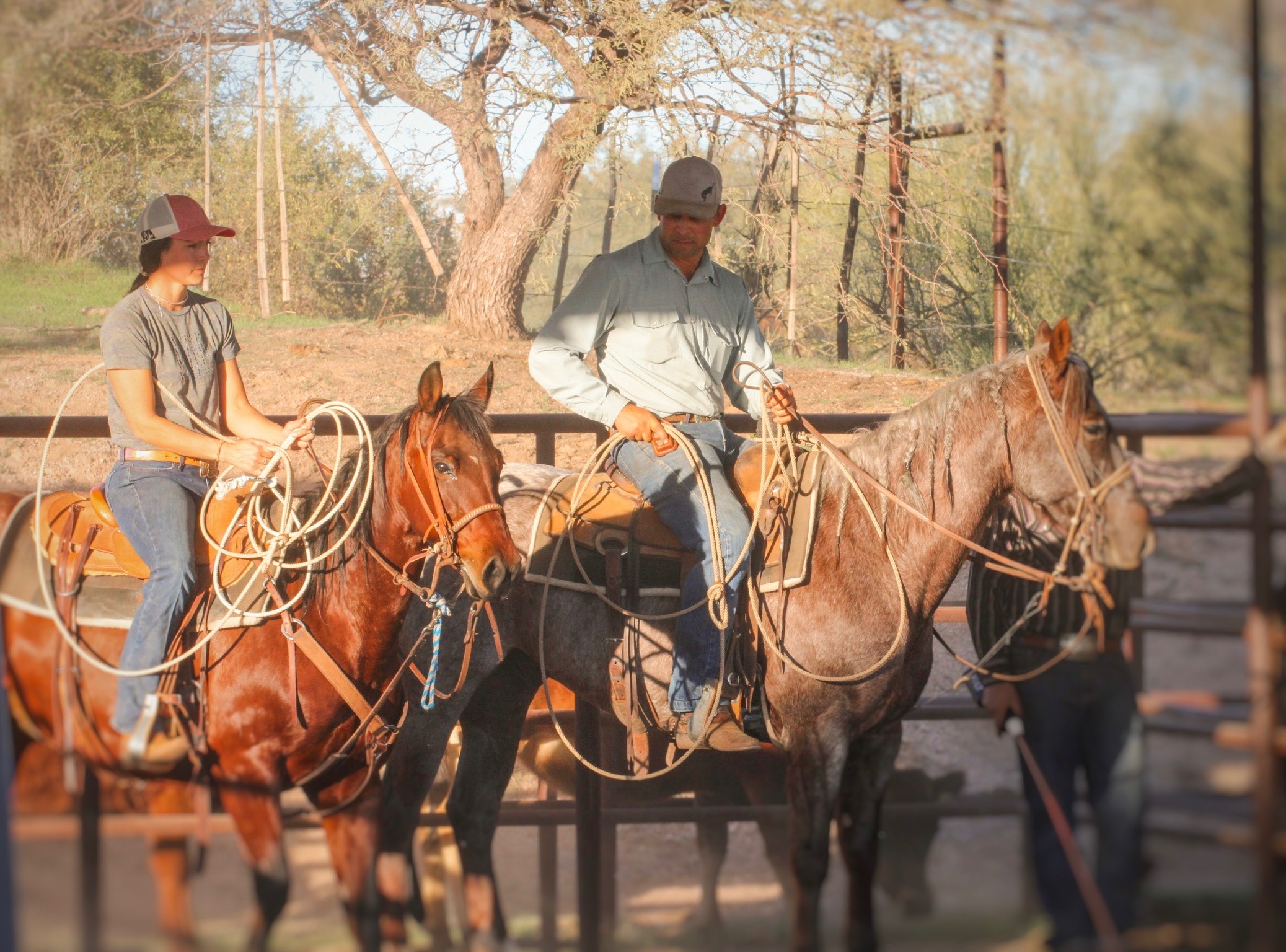
Garth and Amanda met in 1998 and started dating in ’99. Long before there was a breeding program, there was a lot of roping-USTRC jackpots, AQHA team ropings, the whole deal. Breeding horses wasn’t even on the radar yet.
“We didn’t start breeding horses till after several years we were married,” Garth said. It began small, almost sideways — a few mares purchased from Carol Rose that happened to carry rope horse bloodlines. The Gardiners weren’t chasing a cow horse dream. They were just trying to have good horses to rope on.
That changed at an AQHA show in Tulsa, when a friend talked them into entering the amateur cow horse class — a class neither of them had any real business being in. Amanda’s mare had actually been trained as a cow horse years earlier by Carol Metcalf and shown at the Snaffle Bit Futurity, so she knew her job even if Amanda didn’t. Garth’s horse was, in his words, “a nice heel horse, but not very broke.”
Amanda went down the fence, made the turn and came out of the arena grinning ear to ear. By Monday, she was on the phone with a trainer asking if she could start riding with him. That single run in Tulsa is the moment the whole thing tipped over.
Hes Wright On: The Stallion That Started It
A few years later, a phone call from a friend at the Idaho Cowhorse Futurity changed everything again. The Gardiners had already bought into a syndicate share of Lena’s Right On on Carol Rose’s advice, so when they got a call about a young stud named Hes Wright On – a son of Lena’s Right On – it felt like fate. He was four years old, already being shown in the derbies by Doug Williamson, and the Gardiners bought him.
What started as a business relationship with Doug Williamson and Carol Rose turned into something much deeper. “They became part of our family, and we became part of theirs,” Garth said. That partnership — buying into cow horses without fully knowing the industry yet, but surrounding themselves with people who did — became the blueprint for everything that followed.
Hes Wright On became a foundation sire for the program, and one of his own descendants would go on to make the World’s Greatest Horseman finals decades later – a full-circle moment Garth still gets emotional about.
Building Gardiner Quarter Horses One Yearling at a Time.
The Gardiners’ first-ever yearling sale colt at the Snaffle Bit Futurity was a filly named Miss Doc A Doodle Doo, and Garth still remembers walking past Carol Rose’s sale stalls at Reno and feeling like – in his words – “a drug addict passing a pharmacy.” He couldn’t walk by without wanting every colt in her pen.
That feeling became a mission. “I told Amanda, I was like, someday we’re going to get to that point where we can bring colts out here and have people waiting as they’re getting off the trailer.” And they did. Selling well-presented, high-quality yearlings at the Snaffle Bit Futurity became the backbone of the Gardiner program for years, built on a simple philosophy: at the yearling stage, everyone is buying “blue sky.” A colt’s value only holds up if the horse holds up – and the Gardiners’ colts kept holding up.
Hickory Holly Time and the Almost-Deal That Wasn’t
Not every good horse comes easy. Hickory Holly Time who would go on to become a $3 million sire very nearly didn’t become a Gardiner horse at all. He failed a pre-purchase vet exam as a two-year-old, which cost him a different buyer and a hefty chunk of his asking price. The Gardiners bought him anyway, on the advice of a trusted vet who believed the horse could be managed.
“He was so broke as a two-year-old, it was almost hard not to overtrain him,” Garth said. Hickory Holly Time went on to win the Derby and later the World’s Greatest Horseman title after the Gardiners sold him to Dean Tufton — proof that the horses that come with a little risk sometimes pay off the biggest.
The Matriarch: Soula Jule Forever
If there’s one horse at the emotional center of the Gardiner Quarter Horses story, it’s a blood bay mare named Soula Jule Forever, purchased from Todd Bergen as a four-year-old. She became the matriarch of the entire program, producing offspring that have earned close to $800,000 combined — including Sparking Train, who came with an embryo by Metallic Cat that would become Metallic Train, and later Betty Sparks, the highest-earning offspring the Gardiners have ever bred.
Soula was one of the mares sold to Teton Ridge in 2020, during a season Garth describes as a natural, almost God-timed nudge to scale the breeding program back. When Teton Ridge held their dispersal sale years later, Garth noticed Soula wasn’t listed in the catalog — and learned she’d developed soundness issues serious enough that the decision was made to euthanize her.
Days before this interview, a vet from Stephenville, Texas reached out to ask if the Gardiners wanted her ashes. “Absolutely,” Garth said, without hesitation. Soula Jule Forever is coming home.
Full Circle at the World’s Greatest Horseman
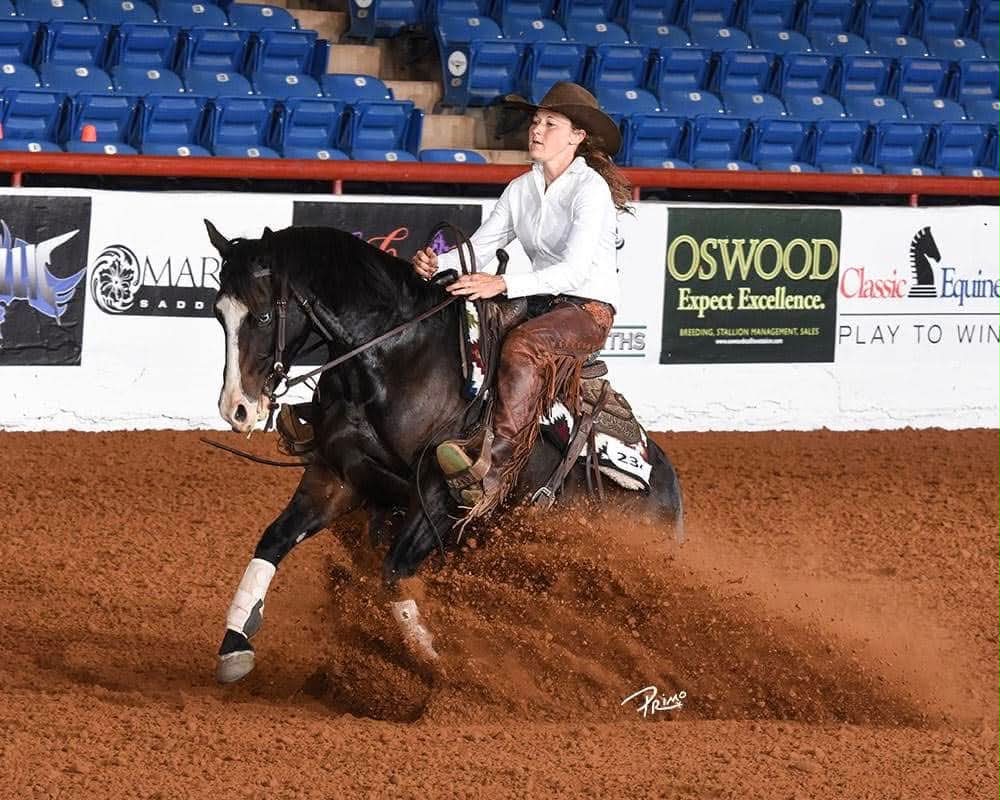
Some of the best stories in this interview aren’t about the Gardiners themselves – they’re about what their horses made possible for other people. Amanda’s beloved mare, Susie Shiner (“Tammy”), the same horse she rode down the fence for the first time in Tulsa, went on to earn 900 AQHA points and tie for the AQHA senior heading world championship, requiring a ride off for the claim of the title.
Years later, one of Tammy’s sons — a gelding they call Lester, sired by Hes Wright On – made the World’s Greatest Horseman finals under a young rider named Sarah, who happened to start him as a two-year-old during a gap between trainers on the Gardiner place. In the finals, Sarah roped a front leg in the steer stopping and texted Amanda and Garth to say she was thinking about scratching. Garth’s response was immediate: “Bullshit. No, you’re going to go down the fence on him. You’re going to go try to win it… These people bought a ticket. I want to see my horse show.”
She did – and rode like she meant it.
Becoming a $2 Million Breeder
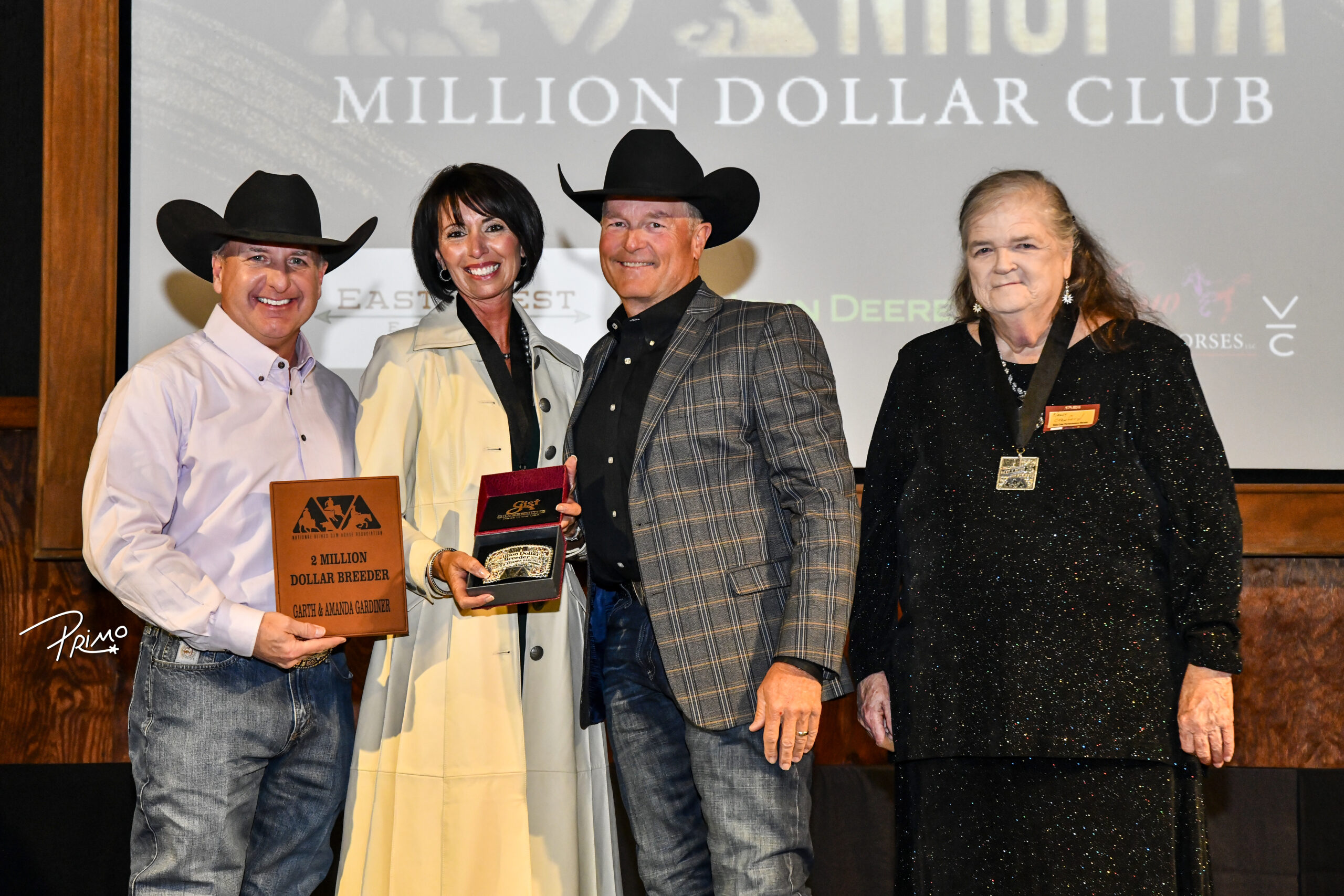
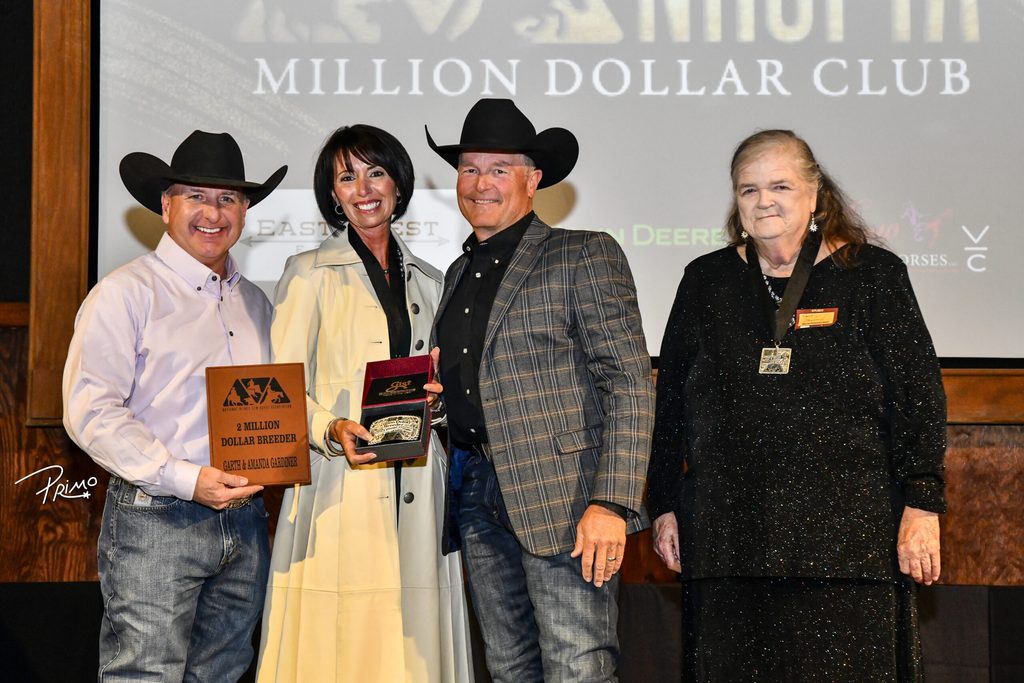
Last year, the NRCHA recognized the Gardiners as Two Million Dollar Breeders, a distinction the organization had never formally honored before, even though it has long recognized million-dollar riders, sires, and dams. Garth admits he’d quietly thought for years that breeders deserved that same recognition — “the backbone of the industry” — but didn’t want to be the one to say it.
Of the 106 competing cow horses the Gardiners have produced, 84 are NRCHA money- earners. Their top three earners alone Bet He Sparks, Jule Smart Rey, and Time For The Diamond – account for more than 25% of the total earnings that pushed them into this rarefied club.
“It’s amazing to be mentioned in the same name as those people,” Garth said, “because I just kind of feel like they’re the legends of this industry. I don’t really feel like that’s us… We’re the same people that drove Dorino in the little three-horse trailer, showed up, didn’t know what we were doing.”
And they’re not done climbing. By Garth’s own estimation, the Gardiners are already closing in on the next threshold – soon to be Three Million Dollar Breeders.
Slowing Down on Purpose
The Gardiners relocated to Texas in 2020, and around the same time, Teton Ridge purchased several of their best mares and an entire yearling crop. Garth calls it a sign a nudge from God to rein things in. They’ve bred far fewer mares since, choosing quality of life over volume.
“I didn’t really want to have to halter break 20 babies a year anymore,” he said plainly. Between rising costs, embryo transplant expenses that can run $15,000 before a foal even hits the ground, and an increasingly competitive market, the Gardiners made peace with doing less and doing it well.
Life Beyond the Breeding Barn
These days, Garth spends much of his time judging — he earned his NRCHA judge’s card four years ago and is one of a relatively small number of non-pros to go through the full testing process. He credits Hall of Famers Dan Rozier and Jim Spence with mentoring him through it, spending hours watching runs and talking through scorecards before he ever judged a show on his own.
“You know, a 73 is still a 73, whether it’s a million-dollar rider marking it or a youth kid,” he said. It’s a philosophy he holds onto, along with a deep respect for what he calls one of the most purely judged events in all of horse sports.
Amanda, meanwhile, pivoted into selling health insurance and has become deeply passionate about helping people in the rodeo and horse industries navigate coverage — an industry, Garth notes with a laugh, that gets oddly cagey when it finds out you own livestock.
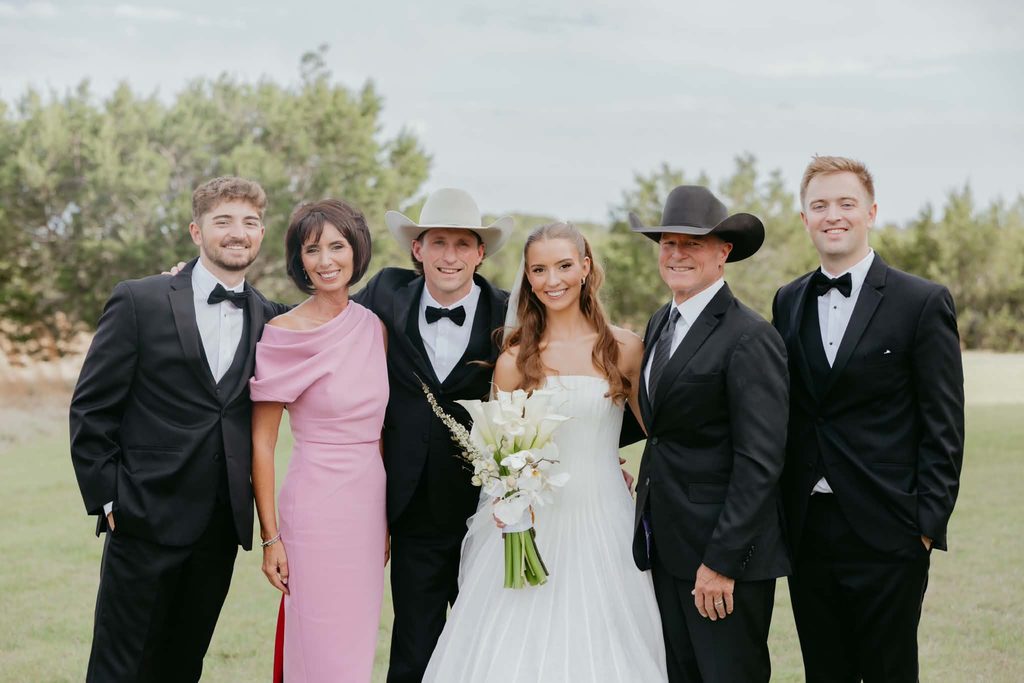
Their three kids have scattered into their own pursuits: their oldest son works for the PGA of America, their middle son is a singer-songwriter performing at NRCHA events and the NFR, and their daughter has spent recent summers rodeoing.
What It’s All Really About
When asked about his biggest struggle, Garth didn’t hesitate to point inward — being too hard on himself, and communication, especially with the people closest to him. But when asked about the biggest reward of this whole journey, his answer had nothing to do with banners, earnings, or titles.
“The relationships that we’ve made, the friendships that we’ve built… I’d bet 80% of my contacts are people we’ve met in the cow horse industry in some form or fashion,” he said. “None of that goes with you. It’s about your relationships and your friendships that you’ve built.”
That, more than any banner hanging in the Justin Arena, is the real story of Gardiner Quarter Horses two rope horse people who didn’t know what a hackamore was, who said yes to a horse show they had no business entering, and who built a family out of an industry one full-circle moment at a time.
Garth and Amanda Gardiner own and operate Gardiner Quarter Horses, recognized in 2025 by the NRCHA as Two Million Dollar Breeders. Garth continues to compete as an NRCHA non–pro while actively judging events across the U.S., Canada, and internationally.
Genuine Stories. Empowering Horse People. A podcast for every horse person still chasing the dream.
Author: Crystal Show
share to
most popular posts