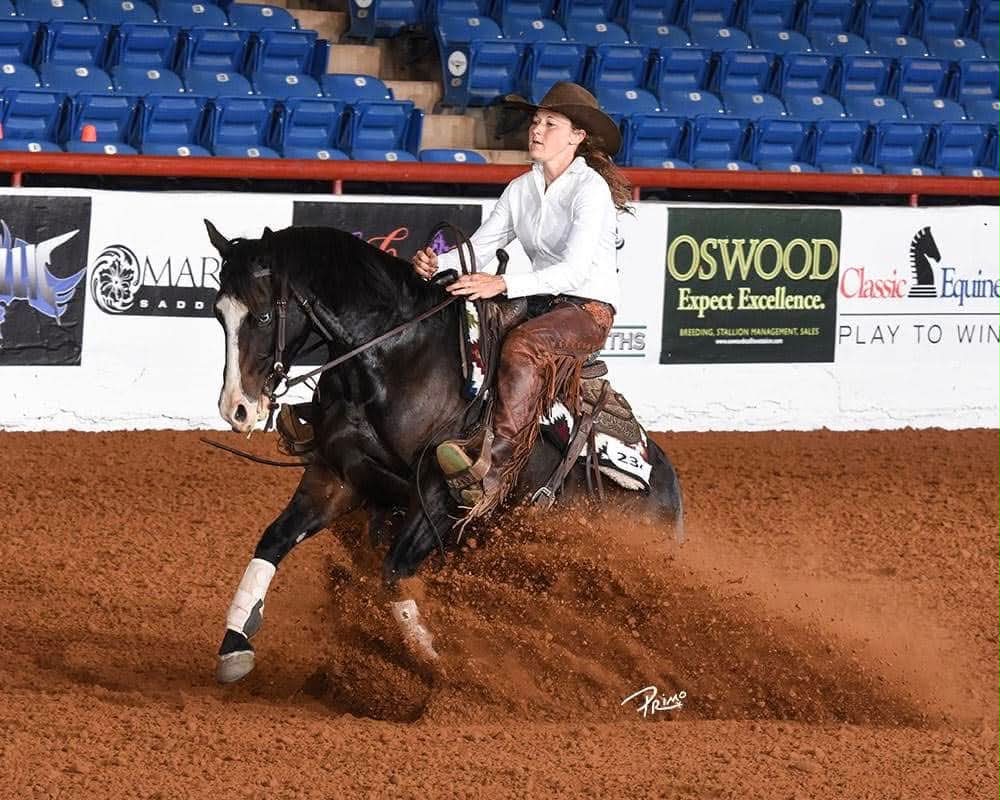
From Jumpers to Cow Horses: Amanda McCarthy on Building a Training Career From Scratch
August 13, 2026


Featuring Amanda McCarthy — cow horse trainer, warm blood rider, former racehorse breaker, and one of the most quietly determined people in the arena.
Some of the best stories in the horse industry don’t start with a silver spoon, a big name trainer, or a trust fund full of futurity horses. Some of them start with a $700 Craigslist horse, a borrowed western saddle, and the nerve to mail an entry to the Snaffle Bit Futurity without knowing what the Snaffle Bit Futurity actually was.
That’s Amanda McCarthy’s story.
She Was Always Going to End Up Here
Amanda’s horse obsession started at two years old at the National Western Stock Show. By eight, her parents took her to a barn on the way home from dance class and that was the end of dance. She became a barn rat — catching rides on anything she could sit on, cleaning tack for free, and doing whatever it took to stay close to horses.
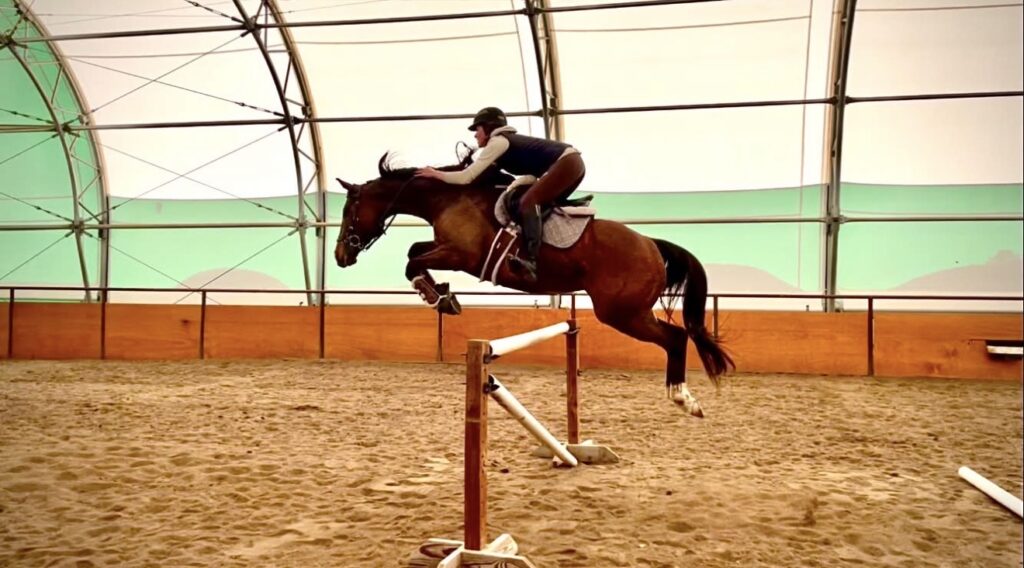
She rode English first, then discovered jumpers through a high school physics project that involved jumping a quarter horse over barrels. Her vet suggested she get a warmblood if she was going to keep jumping like that. She couldn’t afford a trained one, so she bought a young one and figured it out. That became the pattern — find a way, figure it out, keep going.
Jumpers took her through college and all the way to 2019. But somewhere in the middle of all of it, she ended up in Australia riding racehorses. Because of course she did.
The Australia Chapter
After a rough first year of college — pre-vet program, undiagnosed ADHD, a C in chemistry, and leaving class early every day to catch a bus — Amanda decided she needed a different direction. She found a website that was essentially LinkedIn for equine professionals, sent resumes to multiple countries, got several job offers, and chose Australia.
She had never been on a plane alone. She didn’t know anyone there. She went anyway.
She ended up living in King Island, Melbourne, and Tasmania from 2011 to 2016, working as a breaker, pre-trainer, and eventually trainer of racehorses. The two-strike thoroughbreds — the ones nearly banned from racing for unruly behavior — became her specialty. Her approach was simple: get them broke laterally, disengage the hip, get them following their nose. The ones that wanted to rear and blow through barriers couldn’t do it if they had to think sideways.
“I was riding the two-strike thoroughbreds. I learned pretty quickly that the worse they were, the more money I made.”
King Island had a turf track, beaches, and some of the best mornings of her life. She came back to Colorado in 2016, finished her degrees — and this time made the dean’s list because she was actually there for herself — and picked the horses back up.
The Snaffle Bit Story Nobody Saw Coming
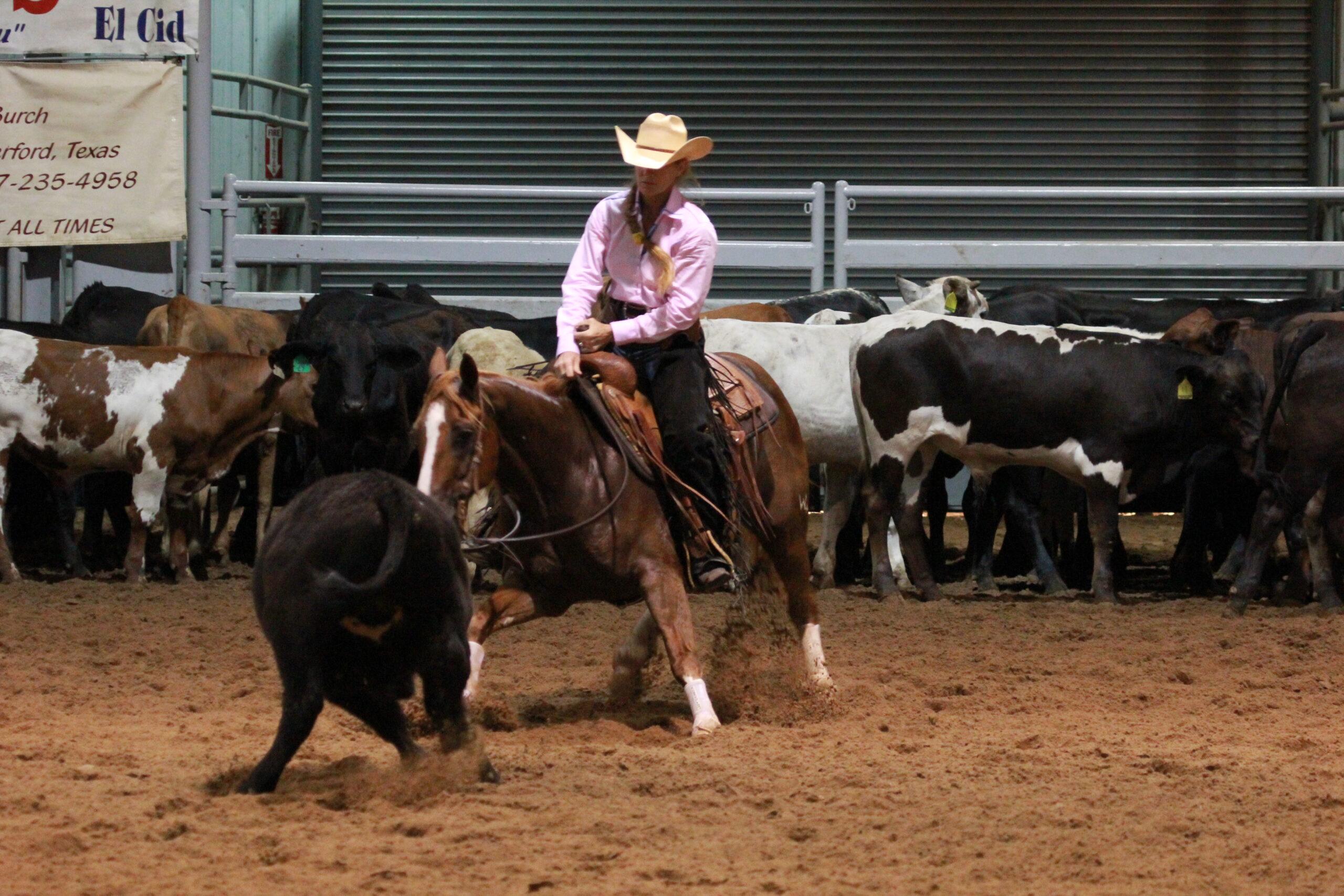
When Amanda first saw videos of horses going down the fence, she had no idea what NRCHA was. She didn’t know what association ran it or how to get into it. She figured out it wasn’t versatility, watched a movie, found the Snaffle Bit Futurity, and signed up.
That was her first cow horse show. Ever.
She had trained her mare without cows. Her boyfriend at the time rode another horse named Tiny, and she would chase him around the arena — Tiny was her cow. She didn’t have a western arena set up for cow horse training. You can still see the jump standards in the background of her warmup videos from that show.
She hot quit in the cutting because she didn’t know the rules. She didn’t know you had to back up after a stop until she was already in her third rundown and hoping the mare figured it out herself. The mare did. She marked a 19.5 down the fence.
“Everybody was like, who are you? And I was like, I have no idea. I just started doing this like two weeks ago.”
She came out of the reining and a trainer at the gate asked where she came from. She assumed the industry was big enough that nobody would notice she was new. They noticed.
But the thing she took home from that show wasn’t a score. It was the people. Everyone was kind. Everyone seemed to want her to do well. That’s why she stayed in cow horses.
Building a Program on $6,250
When COVID shut down showing in Colorado, Amanda used the time to do the work. She bought horses to train — not nice ones, just horses she could learn on.
A Don’t Stop Bellevin filly out of a Metallic Cat mare. A Once Upon a Time gelding. A three-year-old led through the Billings sale for a thousand dollars. A Hollywood Done It son out of a Shirley Apepto daughter. A Highbrow Cat son.
She showed three of them in 2022. The total she paid for those three horses was $6,250.
“The general consensus is that you have to start with a ton of money to do this. It turns out if you just don’t quit, eventually something will work out in your favor.”
The Billings horse was a Doc Olena out of a Pepto Spoonful mare — feely, quirky, and genuinely cowy. The Don’t Stop filly took years to figure out lead changes but eventually became one of her best horses. They weren’t perfect show horses. But they won, and more importantly, they taught her things no expensive horse would have.
What Jumpers Taught Her About Cow Horse Training
The crossover between disciplines isn’t always obvious, but Amanda has thought about it carefully. The biggest difference is contact. Warmbloods are trained to reach into the bridle. Cow horses and cutters need to stay backed off it.
But she found a way to make both work. She starts her cow horses by teaching them to stretch and reach down — dressage-style — and then adds the button to pick them back up and get them off contact. It means her horses lope around in the reining on a drape rein without a fight, because they’ve already learned that dropping their head is a comfortable place to be.
“On one hand it’s the complete opposite, on the other hand it’s actually helped for both.”
The racehorse work in Australia also stuck. Every colt she starts now learns two things first: disengage the hip when bumped in the rib cage, and give to the nose. Two things. That’s it. Everything else gets built on top of that foundation.
Learning to Read a Cow
By her own admission, the hardest part of breaking into cow horse training wasn’t the training itself. It was the cattle.
She didn’t grow up cowboying. She didn’t come from a family who knew livestock. She didn’t work for a trainer who could show her. She had to figure out the cow side of things mostly on her own, and she’s still working on it.
At a show in Scottsdale, a trainer told her that her horses had good style coming across but needed to get there and get back across themselves more quickly. He told her to work the cow with her saddle horn. She’d heard versions of that advice before. But on that day, with that much experience behind her, it finally clicked.
“I feel like so many people have said roughly the same thing to me so many times. I guess I just had to hear it in that way on that day.”
She now describes herself as someone who will take any unsolicited advice anyone is willing to give. You can’t hurt her feelings. She just wants the knowledge.
The People You Choose
One theme runs through every part of Amanda’s story: the people.
She credits the right connections with opening doors she didn’t know existed. She talks about the value of unsolicited advice from people who have spent years learning something and hand it over freely. She talks about the cow horse community being genuinely welcoming to someone who showed up at the Snaffle Bit without knowing the rules.
And she’s direct about burnout. She used to get burned out regularly. Then she figured out the source.
“Are you burned out because of the horses? Or are you burned out because of the people?”
For her, it was always the people. The moment she got selective — surrounding herself with clients who were excited, appreciative, forgiving, and in her corner — the burnout stopped. Her advice to anyone building a training program is the same: good attitude, work ethic, and be kind. Cut the people who don’t treat you well, faster than you think you need to.
“You could be the most talented person in the world and if you’re miserable to be around, you won’t get where you want to go.”
Where She Is Now
Amanda’s program today includes cow horses, cutters, warmbloods, embryo work from her top show mares, and a growing clinic schedule. She’s an introvert by nature, which means clinics take something out of her — but she loves the horses and she loves the people, so she keeps saying yes.
She’s aiming toward the Cutting Futurity with some of her young horses and working with Kenny Platt on the cutting side. The roping is coming — she’s been roping the dummy and getting invited out with friends, and she sees it as a way to stay credible when placing a horse in a secondary career.
She has ridden horses that were nothing on paper and everything in the arena. She has ridden horses that were everything on paper and nothing in the arena. She knows the difference now.
“If you can find a horse that you believe in, stick it out, go get help. You can make it happen.”
Her biggest hope for anyone listening is that they leave this conversation knowing the cow horse world is not off limits just because they didn’t grow up in it. It’s not off limits because they don’t have money. It’s not off limits because they don’t have the right last name.
You just have to show up, keep going, and not be afraid to look like you don’t know what you’re doing. Because you won’t. And that’s fine.
“All I hope is that the people who saw me five years ago can forgive me for who I was. And the people who see me in five years can forgive me for who I am now.”
Listen to the full conversation on Spotify or Apple Podcasts: Horses, Hope & Hustle — Amanda McCarthy on Cow Horse Training, Building a Program From Scratch, and Finding Your People in the Arena.
Author: Crystal Show
share to
most popular posts