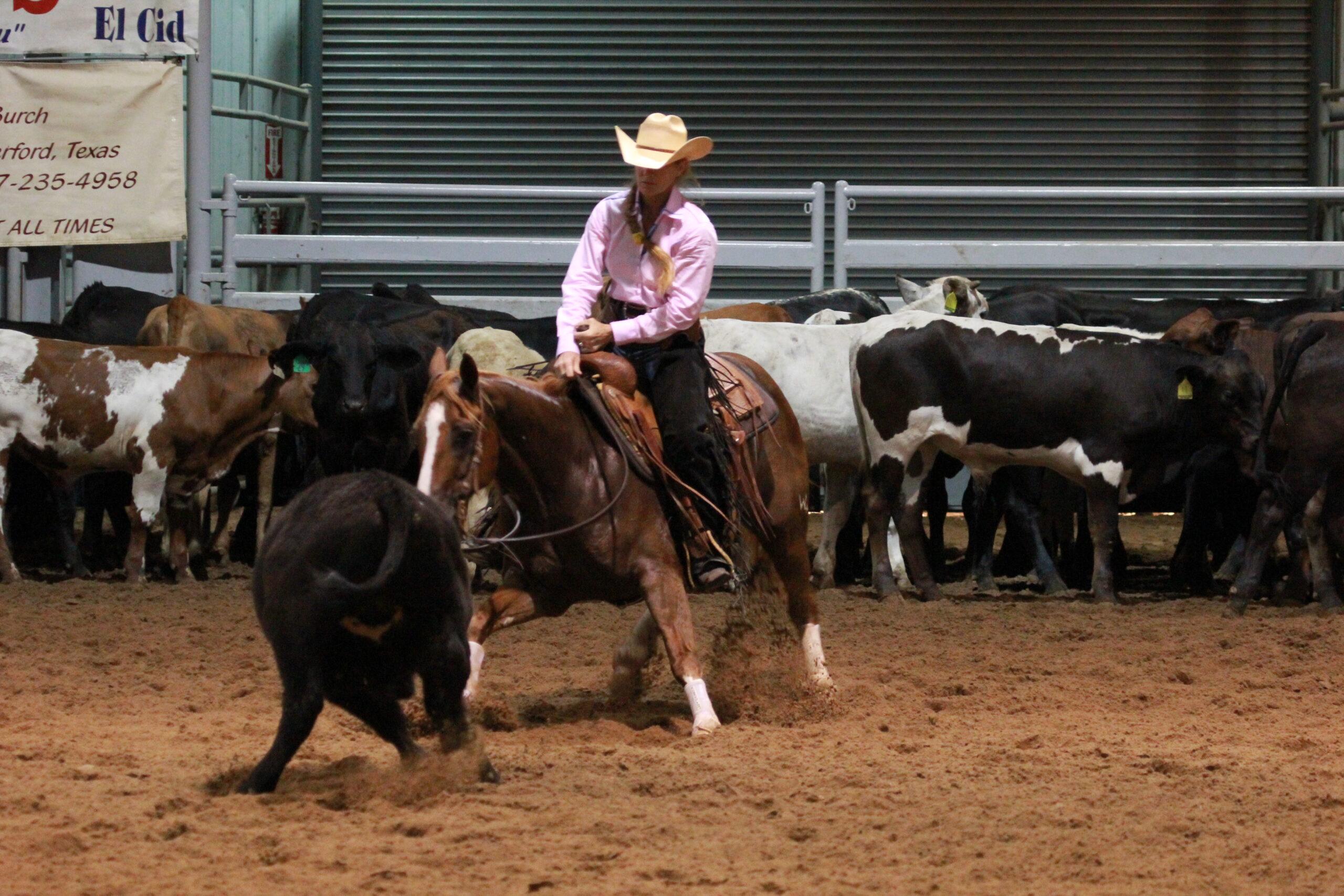
Stay Out of the Penalty Box: A Horse Show Judge’s Guide to NRCHA & AQHA Ranch Classes with Jan Dublin
September 30, 2026


You rode what felt like a clean run. Then you walked up to the show office, grabbed your scorecard, and stared at a page full of numbers, minus signs and mystery penalties that look more like a tax return than feedback.
We’ve all been there.
In this episode of Horses Hope & Hustle, I sat down with longtime judge Jan Dublin of San Angelo, Texas, to pull back the curtain on how judges actually score NRCHA and AQHA Versatility Ranch Horse (VRH) classes. We walked through cutting, reining, cow work, ranch trail and ranch riding — the most common mistakes, the penalties that hurt the most, and how to read your scorecard without needing a translator.
If you’re heading to a show this season (hello, NILE in Billings this October), this one’s for you.
🎧 [Listen to the full episode here]
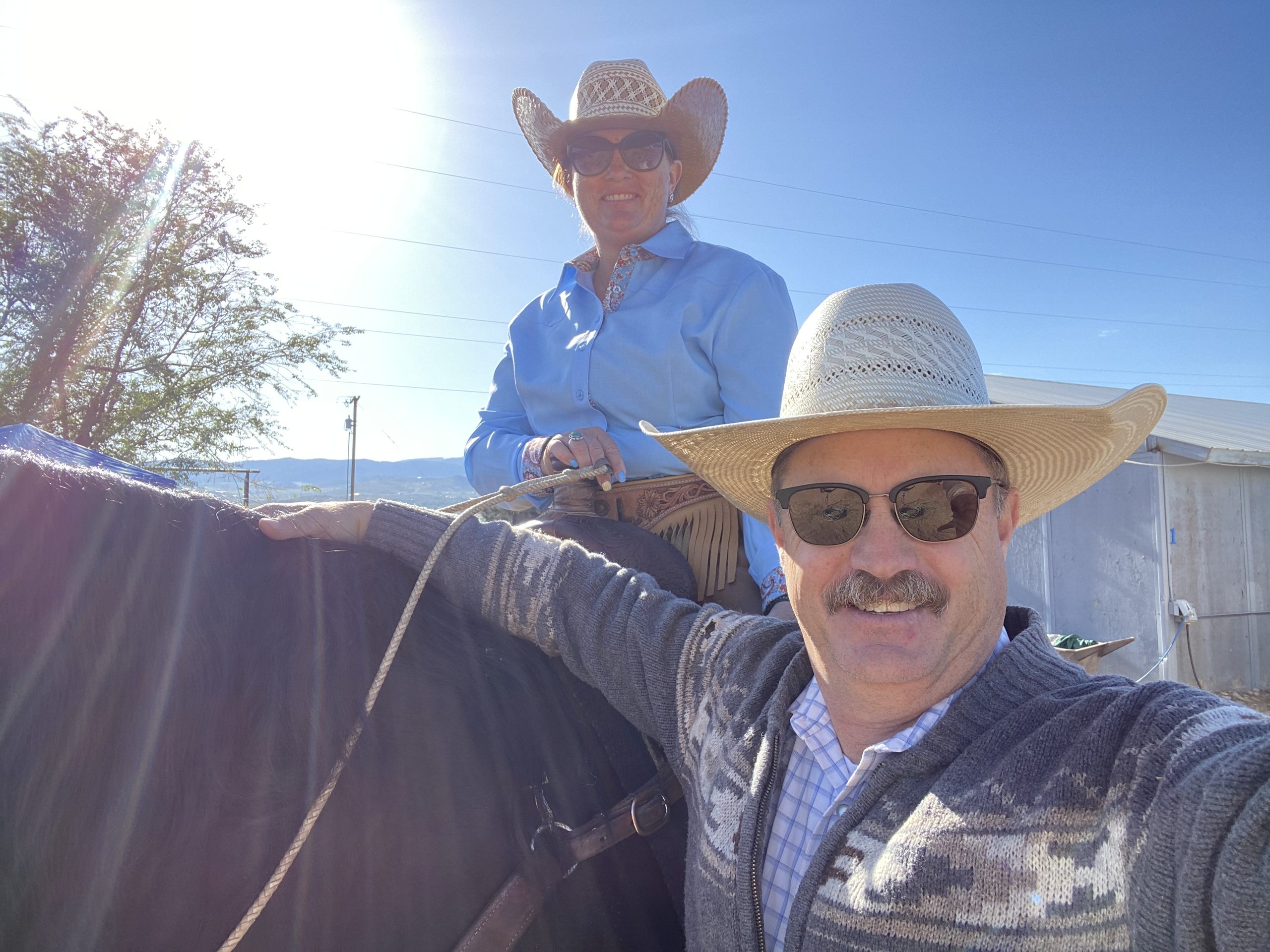
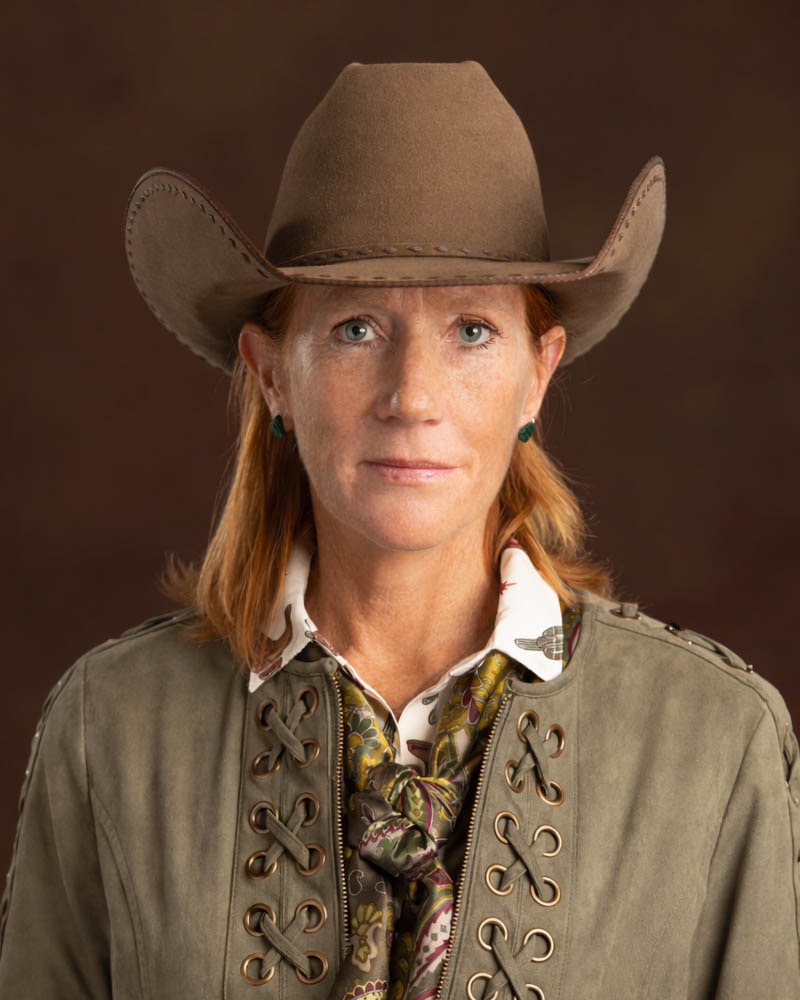
Meet the Judge: Jan Dublin
Jan earned her first judge’s card in 1998 — her NRHA card — and she hasn’t slowed down since. Over the years she’s added cards with AQHA, NRCHA, the Appaloosa, Paint, Pinto, Palomino and Buckskin associations, NSBA, and several stock horse and ranch horse associations, including the Stock Horse of Texas.
She’s had a front-row seat to the explosion of ranch horse classes. Versatility Ranch Horse has technically existed within AQHA for a long time, but Jan says it rarely got offered — and she never judged one until ranch riding took off and the VRH rules were reworked. Today, ranch classes are big enough to keep some horse shows running.
How Do You Become a Horse Show Judge?
Most associations follow a similar path:
- Submit an application with references
- Get approved by the association’s judges committee
- Attend a school or seminar (some associations) or study on your own
- Pass the judging test
The good news for anyone curious about judging — or just wanting to understand it better — is that education is easier to find than ever. Jan points to AQHA University, Horse IQ (which now includes NRHA’s former Reiner Suite), NRCHA’s educational videos and, of course, YouTube. Back in the day, she was ordering DVDs from videographers.
Scoring Basics: How a Judge’s Scorecard Works
Before we get into each class, here’s the foundation every run is built on.
You’re Being Judged the Moment You Enter the Arena
In reining and cow horse classes, there’s no warm-up area inside the pen — you’re being judged as soon as you walk through the gate. Ranch riding and ranch trail may have a warm-up area inside the arena, but the second you leave it and step into the area where the course is set up, your run has started.
That means mistakes like riding with two hands on the reins before your pattern starts can already cost you before you’ve done a single maneuver.
Everyone Starts at a 70
Every rider begins with a score of 70. From there:
- Each maneuver is scored from +1½ to –1½ in half-point increments
- Penalties are added separately and written in the space above the maneuver where they happened
Jan shared the language judges actually use in their heads when scoring:
| Maneuver Score | What It Means |
|---|---|
| +1½ | Excellent |
| +1 | Very good |
| +½ | Good |
| 0 | Correct |
| –½ | Poor |
| –1 | Very poor |
| –1½ | Extremely poor |
The Order Judges Evaluate a Maneuver
This might be the most important takeaway of the entire episode. Judges look at maneuvers in this order:
- Correctness — Did you do the maneuver as written?
- Quality of movement — How well does the horse move while doing it?
- Execution and degree of difficulty — How much are you asking of your horse, and how well does it deliver?
Translation: get it right before you get fancy. Degree of difficulty doesn’t help you if the maneuver isn’t correct first.
Letters vs. Numbers on Your Scorecard
In cutting and cow work, penalties usually come with a letter that matches a key at the top of the score sheet, so you can look up exactly what happened. In ranch riding and ranch trail, penalties appear as numbers only — so if you’re not sure what you did, you’ll need video, your coach, or a conversation with the judge.
Cutting: Take Your Time and Stay in Position
At NILE, the show kicks off with cutting — so let’s start there too.
The Most Common Cutting Mistake: Rushing the Herd Work
Ranch cutting gives you two minutes; an NCHA cutting gives you two and a half. Jan says riders get in a hurry because two minutes sounds short — but once you’ve done it a few times, you realize it’s more time than you think.
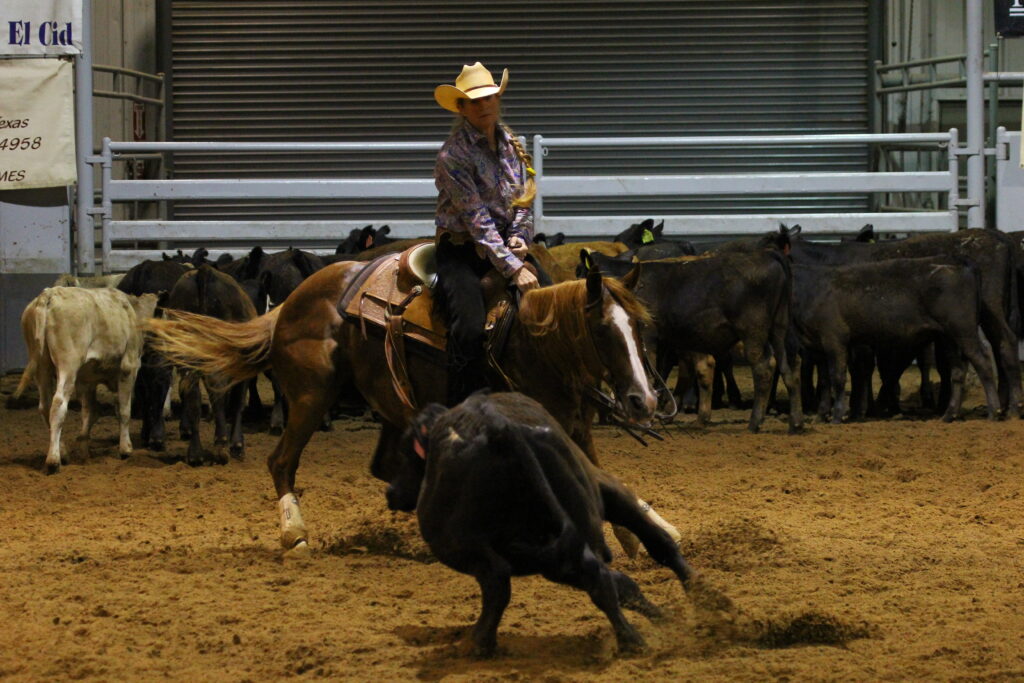
Setting up your cow is one of the most important parts of your run. Go into the herd slowly. If you have a specific cow in mind, going after it is credit-earning. If they all look the same, push the herd forward, let them flow around you, and take the one at the top that looks like it wants to stay.
Don’t commit too early. If you pick one cow, change your mind, and go after another, that’s a 5-point penalty for switching. Do that on your first cut, and your 70 just became a 65 before the fun even started.
What Separates a Plus Run from a Minus Run
It comes down to position and control. Jan describes correct working position as:
- Keeping the cow out in front of you
- Staying close enough to be in position
- Staying centered and balanced with the cow
- Stopping and turning naturally — without chasing
If you have to chase, you’re behind. If you’re too far ahead, the cow will eventually turn back and you’ll end up behind anyway. Your goal is to stay in the middle of the cow’s path and use the right amount of pressure — enough to show quality and degree of difficulty, but not so much that you overwork it.
And let the cow do the moving. It should look like the horse is responding to the cow — not like you’re forcing the work.
When Does Degree of Difficulty Count?
A tough, busy cow can earn you credit — but only if your horse can handle it. If your horse can’t keep up, it’s not really degree of difficulty anymore. And if you’re pulling on your horse through every turn and it’s showing resistance, that hurts your eye appeal too.
As I said on the show: know the horse you showed up on.
Cutting Pen Markers
- Timeline: Time starts when your horse’s head crosses it.
- Back fence markers: Placed on each side of the back fence, roughly halfway between the center gate and the end wall.
If the cow’s nose gets into the back fence area within three feet of the fence, you’re in a back fence penalty. If it’s back there but not within three feet, you’re looking at a 1-point working out of position penalty, a loss of working advantage, or both. Losing a cow costs you 5 points.
Cutting: Zero Scores, DQs and the “60” Rule
In ranch classes, DQs include abuse, lameness, illegal equipment, misconduct, disrespect, improper attire, leaving the working area before time expires, excessive schooling, and a fall of horse or rider. Judges may also blow the whistle if a situation becomes dangerous. In cutting specifically, you can also be disqualified for excessively disturbing the herd.
In NCHA cutting, the lowest placing score is a 60. A 60 still lets you place or advance. A zero disqualifies you from placings, prizes and money.
What Does “OP” Mean in Ranch Classes?
This one trips up a lot of exhibitors, so it gets its own section.
OP means “off pattern.” In ranch classes, an OP isn’t a disqualification — you still get a score. But you’ll place below every rider who didn’t go off pattern, no matter your score. A 74 with an OP still places behind a 68 without one. Riders with two OPs place below riders with one, and so on.
Common OPs include:
- Going off pattern (skipping, adding, or not completing a maneuver)
- A third refusal at an obstacle
- Riding with two hands on the reins
- Fingers between the reins
- Repeated blatant disobedience (like kicking out multiple times)
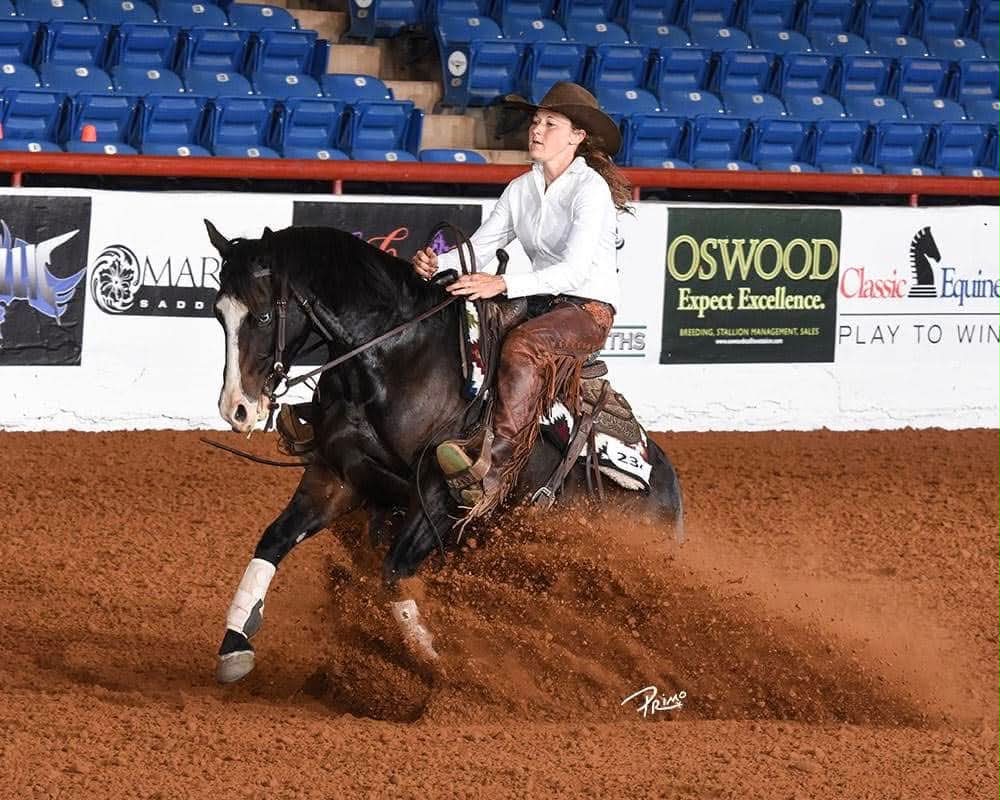
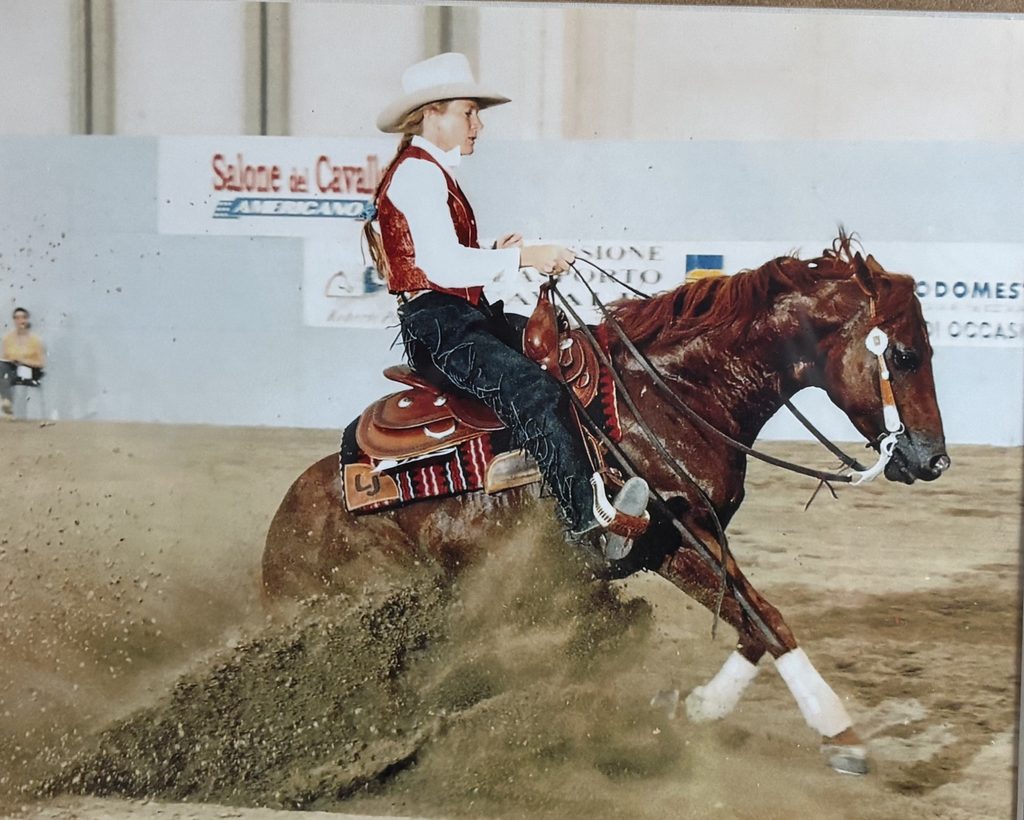
Reining: Pattern Placement, Lead Changes and Spins
The Most Common Reining Mistakes
Reining puts extra emphasis on pattern placement. Jan sees these most often:
- Missed lead changes — they’re hard, and it shows
- Not passing the marker before a stop
- Poor pattern placement — circles should run through the center of the pen and be placed as precisely as possible
- Weak speed transitions — if the pattern calls for a large fast circle and a small slow one, make the difference obvious
Where the Reining Markers Are
There are three markers on the side fences: one at the center of the arena and two placed at least 50 feet from each end fence, leaving room to pass the marker and stop before the fence.
On lateral stops, stay at least 20 feet from the side fence. Getting too close is a ½-point penalty (judges can allow a little leniency in smaller arenas).
Resistance Matters More Than You Think
Every rule book has a “General” section that talks about horses being willingly guided with little or no resistance. Jan says judges are watching for:
- Horses guiding well and staying between the reins
- Minimal hand movement from the rider
- Slack in the reins and a nice overall picture
A little resistance keeps you around a zero if everything else is correct. Soft, willing guiding plus strong speed control is what pushes you toward the plus side.
Reining OPs
Beyond the standard OPs, reining has one unique to it: trotting more than half a circle or more than half the length of the arena. Excessive schooling can also lead to a DQ.
Jan shared that as a courtesy, she’ll often keep scoring a run after an OP if the rider still looks like they’re showing — so they can learn from their scorecard. Sometimes riders don’t even realize they added an extra spin until the end.
Overspins and Underspins
| Spin Error | Penalty |
|---|---|
| Up to ⅛ turn over or under | ½ point |
| ⅛ to ¼ turn over or under | 1 point |
| More than ¼ turn over | Off pattern |
| Stopping more than ¼ short, then completing the spin | 2-point freeze-up (still on pattern) |
The more-than-a-quarter rule applies across classes — even in ranch riding, going more than a quarter turn past where you should be puts you off pattern.
Lead Change Penalties Add Up Fast
This one surprised me. If your horse is one stride late on a lead change, that’s an immediate 1-point penalty. Then you add another point for every additional quarter of the circle you stay on the wrong lead. Never change leads for two or three circles, and you’re looking at 8 to 12 points in penalties — and you’re still technically on pattern.
Jan’s smart play: if you can’t get the flying change, break gait and fix it. A 1-point late change plus a 3-point break of gait hurts, but not nearly as much as eight or twelve.
Other lead change penalties:
- Non-simultaneous change (front and hind don’t change in the same stride): ½ point
- Early change well before the change area in the center of the pen: 1 point
Cow Work: Fence Runs, Boxing and Why You Didn’t Get a New Cow
The Most Common Cow Work Mistake: Getting Out of Position
Just like cutting, it all comes back to position. And the biggest test is going down the fence. You need to stay behind the cow enough to drive it, then get ahead of it to turn it before it reaches the corner.
- Too close or too fast → it may turn before the center marker (1 point)
- Too far behind → loss of working advantage penalties, or the cow reaches the corner before you can turn it
Fence Work Markers and Penalties
| Marker / Situation | Penalty |
|---|---|
| First turn made before the center marker | 1 point |
| Cow passes the 1-point C marker (where the straight fence starts to curve into the corner) | 1 point |
| Cow passes the 2-point A marker (16–24 feet past the 1-point C) | 2 points |
| Changing sides of the arena to turn the cow (1-point E) | 1 point |
| Cow is turned by the end fence while you’re off the fence (2-point B) | 2 points |
| Circling turn on a two-turn run where you don’t change direction to circle (2-point C) | 2 points |
| No second turn | 5 points |
Why You Didn’t Get a New Cow
This is the one I wish every contestant heard before walking into the pen. If you weren’t in correct working position, you don’t get a new cow.
If your cow blows out of the box and you just sit there and watch it go by, you won’t get a new one. If you can never get by the cow on the fence, you won’t get a new one. You have to show you tried to get into position to work it. If you’re in position and the cow still won’t yield — it keeps pushing you, won’t turn, won’t respect you or your horse — that’s when the judge calls for a new cow.
Boxing: What Judges Want to See
Judges want to see you control the cow by driving it and then turning it. Get behind it, drive it along the short wall, then get ahead of it to stop and turn it back — because driving is exactly what you’ll be doing down the fence.
How much boxing you do depends on your cow. A salty, fast cow may need a little more time on the end to take the edge off. A slow one? Two or three drives, then go — or you’ll run out of cow. Ideally, you’ll leave from the corner and head straight up the wall, which sets up easier turns.
What Makes a +1 Fence Turn vs. a –1 Fence Turn
Plus side: You’re at the cow’s hip driving it down the fence, you go by it at the right moment, turn it on the fence, and stay right up on it through and after the turn. The horse drops onto its hocks to turn.
Minus side: You’re late rating down the fence, you run by the cow, you have to pull your horse around, or the horse turns on its front end or jams its shoulders into the ground instead of sitting on its hocks.
How the Cow Work Scorecard Flows
- NRCHA: Boxing → turns → circles, then rating, position and control, degree of difficulty and eye appeal are finished at the end. Turns are averaged across three boxes.
- VRH: Amateur and youth riders can circle or rope; open riders must rope, which is scored on track and rate and stop and hold. Everything is added up across the card rather than averaged.
Cow Work OPs, DQs and the “60” Rule
Turning tail on the cow is an OP in ranch classes and a zero in NRCHA. Other OPs include two hands, fingers between the reins, repeated blatant disobedience, skipping any part of the class (like the roping or the circles), and losing your rope in the open.
In NRCHA and NCHA competition, 60 is the lowest score. In VRH classes, judges keep counting — scores can drop below 60.
AQHA Box Drive Box and Box Only
Box Drive Box
You get 1 minute 45 seconds, with a 30-second warning. The class is designed as a stepping stone toward fence work, so the drive matters:
- Box the cow and show control
- Drive it down the fence at the cow’s hip, like you’re setting up a fence turn
- About three-quarters of the way down, ease off and set up to box on the far end (usually the tougher end — cows want to go home)
- Drive it back down the same fence you came down
- Once you pass the center marker, the whistle blows and you’re done
Big penalty situations:
- Driving back down the opposite fence: 1 point
- Not getting the cow across the center line in two attempts: OP, with minus 1½ maneuver scores on the far end
- Cow crosses center, then circles back across: whistled out, 5-point penalty for no turn on the far end, plus negative boxing and drive scores
- Time runs out before you attempt the second drive: 3 points
Box Only
The most common big penalty is loss of cow from the end — a 3-point penalty when the cow gets lined out for four to five strides down the arena, usually with a 1-point miss attached. You’ll also lose working time going to get it back.
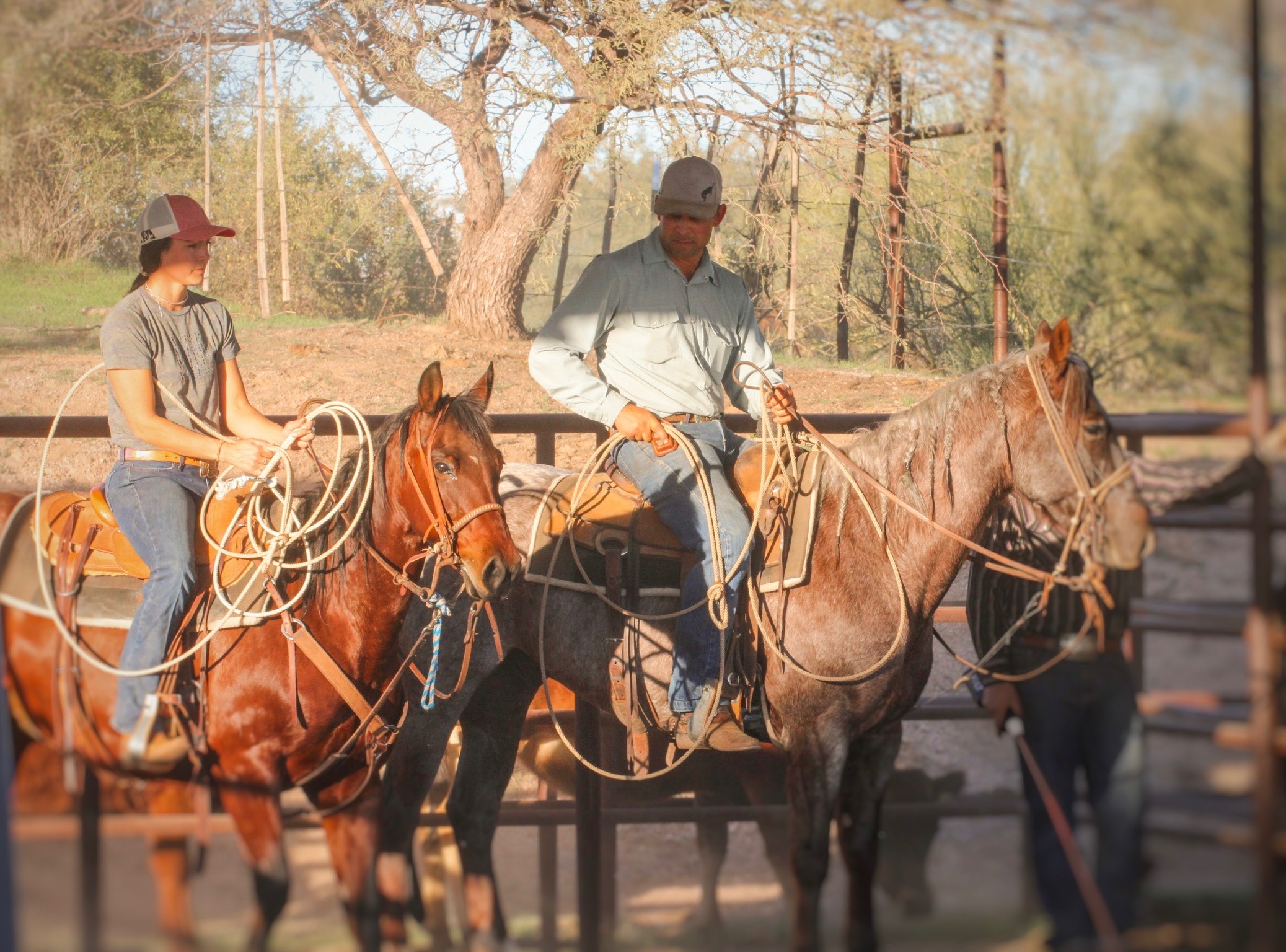
Ranch Trail and Ranch Riding: Smooth Beats Speedy
The Most Common Mistakes
- Rushing. Ranch trail should be efficient — but it’s not a race. Don’t push a side pass faster than your horse can handle.
- Lope-overs. Ranch horses vary a lot in stride length, which makes hitting the right distance to the first log tricky. Help your horse by picking up on it to shorten its stride when needed. This takes lots of work at home.
- Transitions and lope departures. Nail a correct departure first, then work on quality and degree of difficulty.
The good news: Jan says riders are getting so much better. Drags and roping, which used to cost people points, have really improved.
What Earns a Plus in Trail and Ranch Riding
Above all, your horse should be paying attention to the obstacle. Horses want to look at stuff — so at home, let them notice obstacles and work through them with accuracy, smoothness and control. It shouldn’t look rushed, and it shouldn’t look too slow.
And if your horse isn’t great at something, don’t overreach just because you’re in the show pen chasing points. Do what’s comfortable for you and your horse.
Do You Get Penalized for Nicking a Log?
- Ranch trail: There’s no ½-point nick. Hitting or stepping on a log is a 1-point penalty — the judge needs to hear it or see it move.
- Ranch riding: There are no penalties for hitting logs, stepping on logs or skipping a space. It all goes into the maneuver score.
And one small penalty won’t necessarily sink the whole maneuver. One tick on a set of four logs where the horse was otherwise accurate can still earn a +½.
Extended Gaits: Extended, Not Racetrack
Jan’s plea for ranch riders: please don’t exaggerate the extended gaits. An extended trot or lope should be a lengthening of stride and covering more ground — not a race. The horse shouldn’t be hitting its front feet with its hind feet, and neither horse nor rider should look uncomfortable. Ask yourself: could you ride like that for long out on the ranch?
Ranch Horse Appearance: Look Like You Mean It
On the AQHA scorecard it’s called ranch horse appearance; on the Paint card, it’s expression and attitude. Same idea, scored from –1½ to +1½.
Judges want ranch horses that look like they can do the job — and like they enjoy it. Ears up, good expression, not grumpy. No dead tails — ranch horses need to be able to move their tails.
Turnout Rules to Know
- Braided tails: DQ in ranch classes. Take your tails out!
- Mane braids: Three or four small braids at the withers are allowed (ropers do it to keep the mane out of the rope), but no fully braided mane.
- Hoof polish: DQ.
- Breast collar and back cinch: Not mandatory, but they complete the ranch look.
- Heavy silver: A little is fine; heavy silver on saddles is discouraged.
How to Read Your Horse Show Scorecard
If you’ve never looked at a score sheet before, it’s overwhelming. Here’s Jan’s advice:
- Ask your judge. You’re allowed to ask your judge questions in the presence of a ring steward — and judges genuinely want you to.
- Find someone who knows. Your coach or an experienced exhibitor can walk you through it.
- Use the penalty key. On AQHA score sheets, all the penalties are listed at the top.
- Replay your run. Think back (or watch video) and match penalties to the maneuvers where they were written.
- Read your rule book. Several times. The better you know the penalties, the less mysterious your scorecard becomes.
The most common source of confusion, according to Jan? Exhibitors who think a maneuver went fine and don’t understand the –½. Often, it’s something like resistance that doesn’t show up as a penalty but still pulls the maneuver score down.
Always Use the Online Rule Book
NRCHA and AQHA rule books are all online, and AQHA has an app. Jan says the online edition is always the most current — typos and errors get corrected there right away, while printed books don’t update until the next year.
Judges Are on Your Side
My favorite moment of the whole conversation was when Jan reminded us that judges aren’t there to be scary.
They’re cheering for you. When they see a big penalty happen, they’re wincing right along with you. They want you to do well.
So walk in the gate, stay in position, get your maneuvers correct before you get fancy, and do your best to stay out of the penalty box.
Frequently Asked Questions
What score does every rider start with in NRCHA and AQHA ranch classes? Every rider starts at 70. Maneuvers are scored from +1½ to –1½ in half-point increments, and penalties are subtracted.
What does OP mean in ranch horse classes? OP means off pattern. It isn’t a disqualification, but an OP rider places below every rider without one, regardless of score.
Is a braided tail allowed in AQHA ranch classes? No. A braided tail is a disqualification in ranch classes. A few small braids at the withers are allowed.
Do you get a penalty for hitting a log in ranch riding? No. Ranch riding has no hit penalties — it’s reflected in the maneuver score. In ranch trail, hitting or stepping on a log is a 1-point penalty.
Why didn’t I get a new cow in the cow work? Judges only call for a new cow when you’re in correct working position and the cow still won’t yield or turn. If you weren’t in position to work it, you won’t get a new cow.
Can I talk to the judge about my scorecard? Yes. You can ask your judge questions in the presence of a ring steward, and judges encourage it.
See Jan at the NILE
Jan will be judging at the NILE in Billings, Montana, this October — and she’s up for answering exhibitor questions at the show. Come say hi, bring your scorecard, and put what you learned here to work.
🎧 [Listen to the full episode of Horses Hope & Hustle with Jan Dublin]
Rules change and vary by association. Always check the current online rule book for the association you’re showing in.
Stay true, stay tough, and keep hustling.
Author: Crystal Show
share to
most popular posts