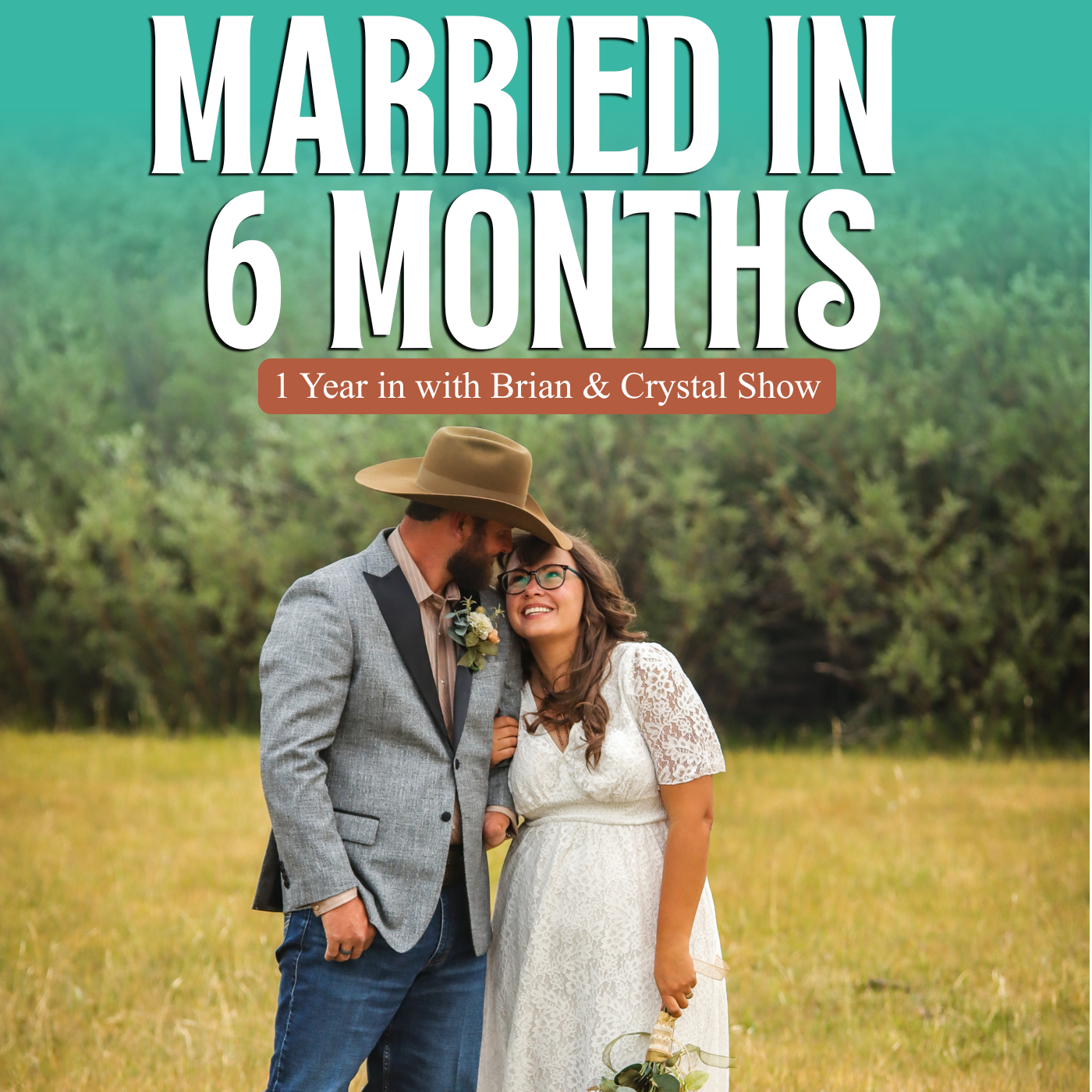


I’ll be honest — getting my husband on this podcast was not easy.
Brian Show is not a man who talks about himself. He’s not going to stand up and give a motivational speech or sell you on his story. If you ask him how he does what he does with one hand, he’s going to look at you like you asked the dumbest question he’s ever heard and say, “You just go do it.”
And that, honestly, is exactly why I needed him on here.
Because sometimes the most powerful thing isn’t the polished speech. It’s the man who has never once let a limitation convince him he was limited.
The Hand He Was Dealt
Brian was born without his left hand. The umbilical cord wrapped around it during development, and it never formed. He has his elbow and about half a forearm — and that’s been enough for 32 years of welding, roping, building, wrenching, and doing pretty much anything he’s set his mind to.
Prosthetics were tried when he was young. They’d go get fitted, do all the fancy stuff, come home — and Brian would take them off the second they got in the way of something he was already doing just fine. Eventually the family stopped spending the money, because he was never going to use them.
Growing up in Mancos, Colorado, his family owned dude outfits. They packed in, hunted, trail rode, and essentially tortured whatever gentle horses were available. Nobody in his world made a big deal about his hand. Nobody treated him any different. So he never thought of himself as different.
“Nobody that knew me anyways treated it any different. I just would figure it out.”
His mom drove him to town before kindergarten to find a lady who knew how to tie her shoes with one hand. He learned. No more Velcro. Done.
That’s Brian in a nutshell.
Learning to Weld, Traveling the Country
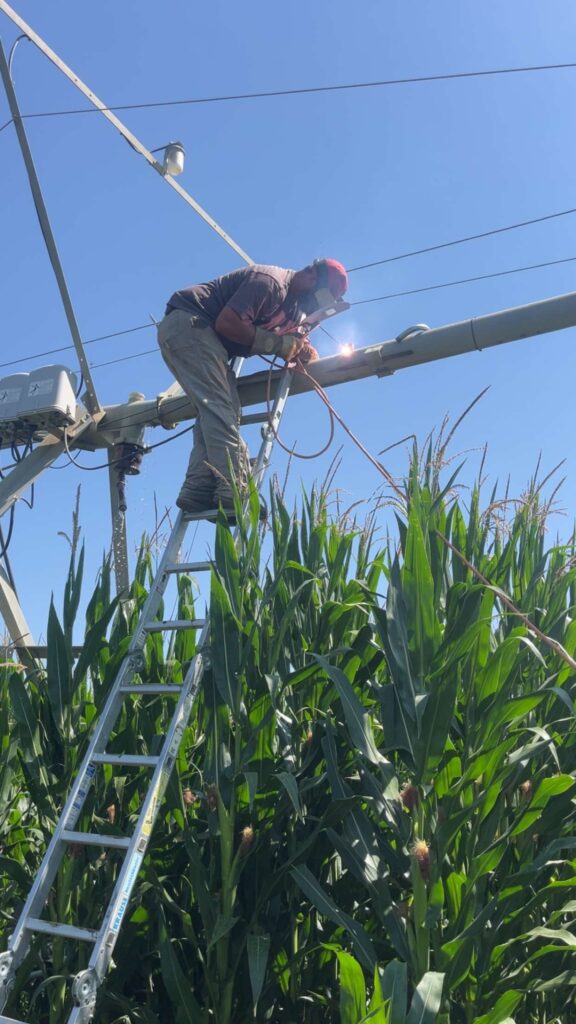
Brian worked the pipeline for close to seven years. Did the labor, made decent money, and eventually got tired of being the low man on the totem pole. So he decided to learn to weld.
He helped a welder for about a year — learning less about the actual welding and more about what it means to be a welder, the mindset and the trade. The real learning came when he was doing it every single day on actual jobs. He bought his own machine and traveled the country. Saw a lot of it. Got paid to do it.
Those pipeline years weren’t all productive — by his own admission, what money didn’t go toward keeping himself working mostly went to bars. Fun for a young man, but nothing to show for it in the end. Which matters for what comes next.
TIG welding, for those who don’t know, requires one hand to hold a torch that heats the metal and the other to feed a filler rod into the weld puddle. When you’re missing a hand, you improvise. Brian uses a hose clamp around his arm, slides the filler rod into it, and works the whole thing from there. It’s not always pretty, he’ll tell you that himself. But the product is good.
That’s just how he approaches everything. Figure it out. Get it done. Move on.
Getting Sober, Getting Back in the Saddle
About five and a half years ago, Brian quit drinking. Not because someone made him. Not because of a dramatic rock bottom. He just matured into it, got tired of bored weekends that always ended the same way, and one day decided that was enough. Set his mind to it. Never picked it back up.
A year later, he quit Copenhagen. Nearly two cans a day. He bought one last tower of ten cans in Arizona, told himself when they were gone, they were gone — and held to it. He’ll still wake up dreaming about it occasionally. That’s just how it goes.
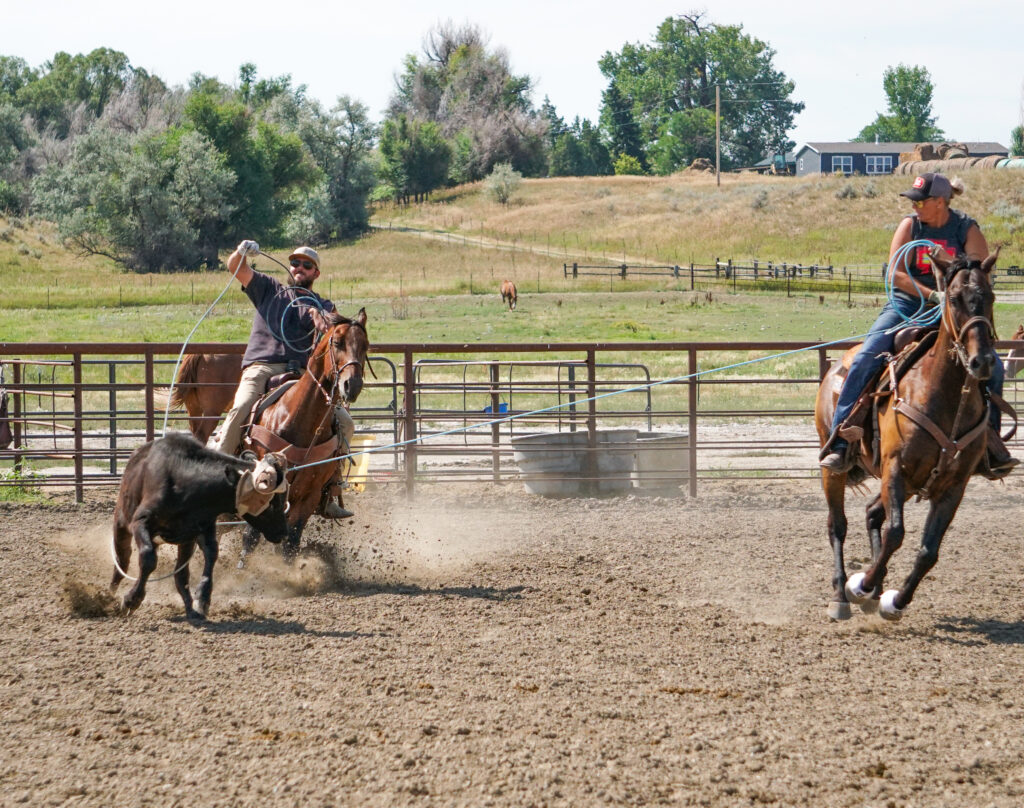
What happened after sobriety? He bought a horse. Got back into roping. Started building something.
“I just after I quit pipelining I was home and didn’t have nothing to do other than drink beer, and I was got to where I was over that. Didn’t want to drink anymore. So I bought a horse.”
He’d always loved roping — always had a rope in his hand growing up, always roping the dummy, always liked the feel of it. Just never liked riding horses enough to commit to the whole package. He started heeling. His cousin got a head horse. They put some steers in a pin and figured it out together the hard way, building bad habits and having a blast doing it.
He’ll be the first to tell you the first few years were rough. Couldn’t count how many loops that were wrong. Here they are anyway.
How He Actually Rides and Ropes
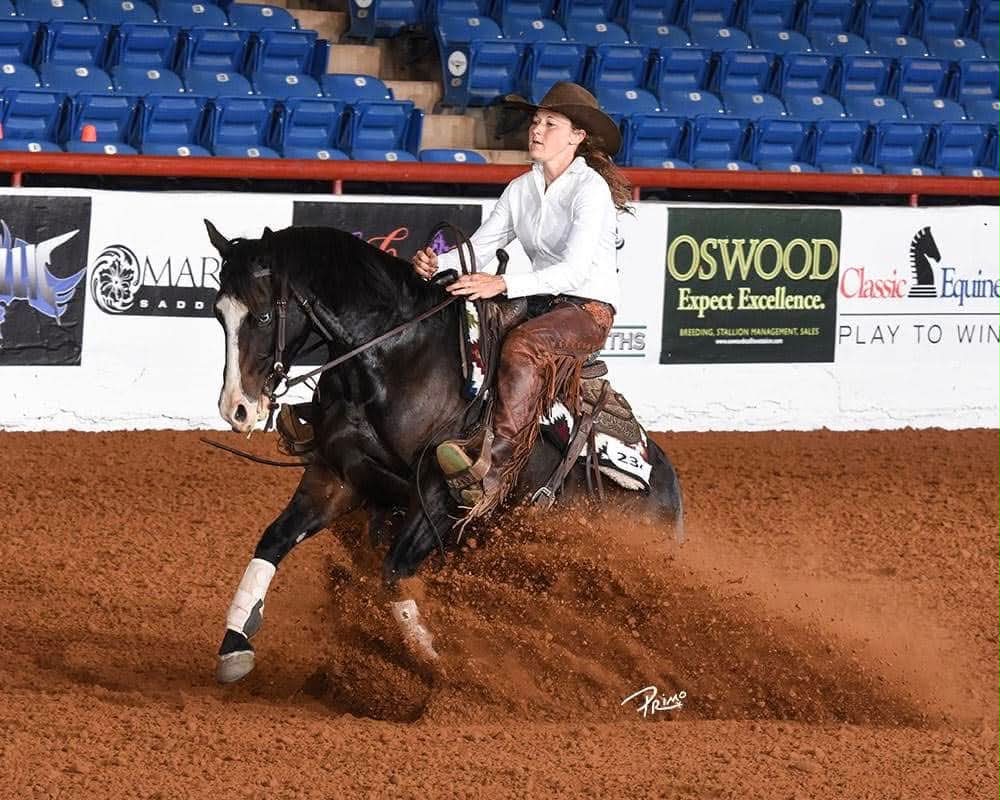
For the people who haven’t met Brian in person, here’s what it looks like from the saddle.
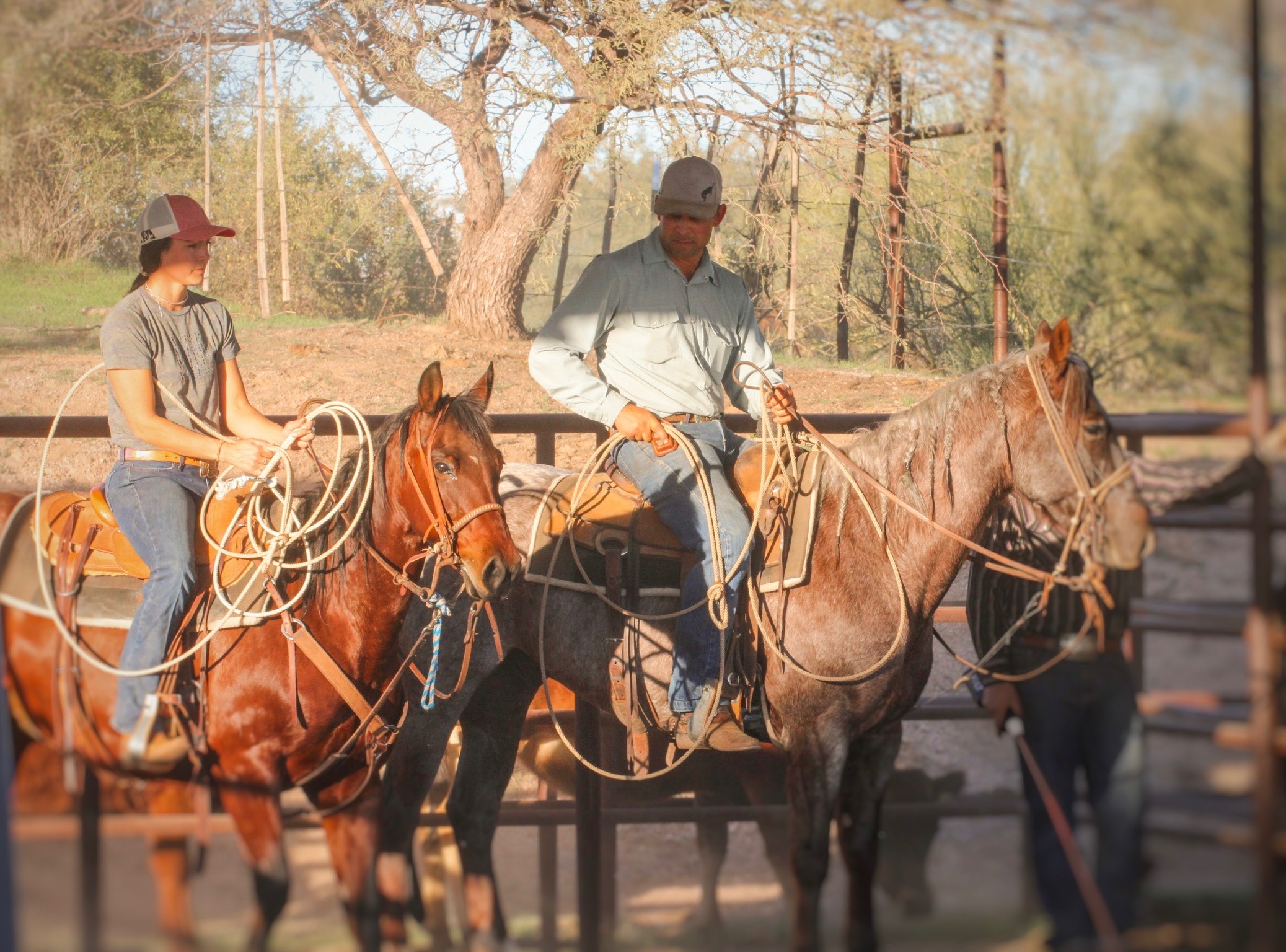
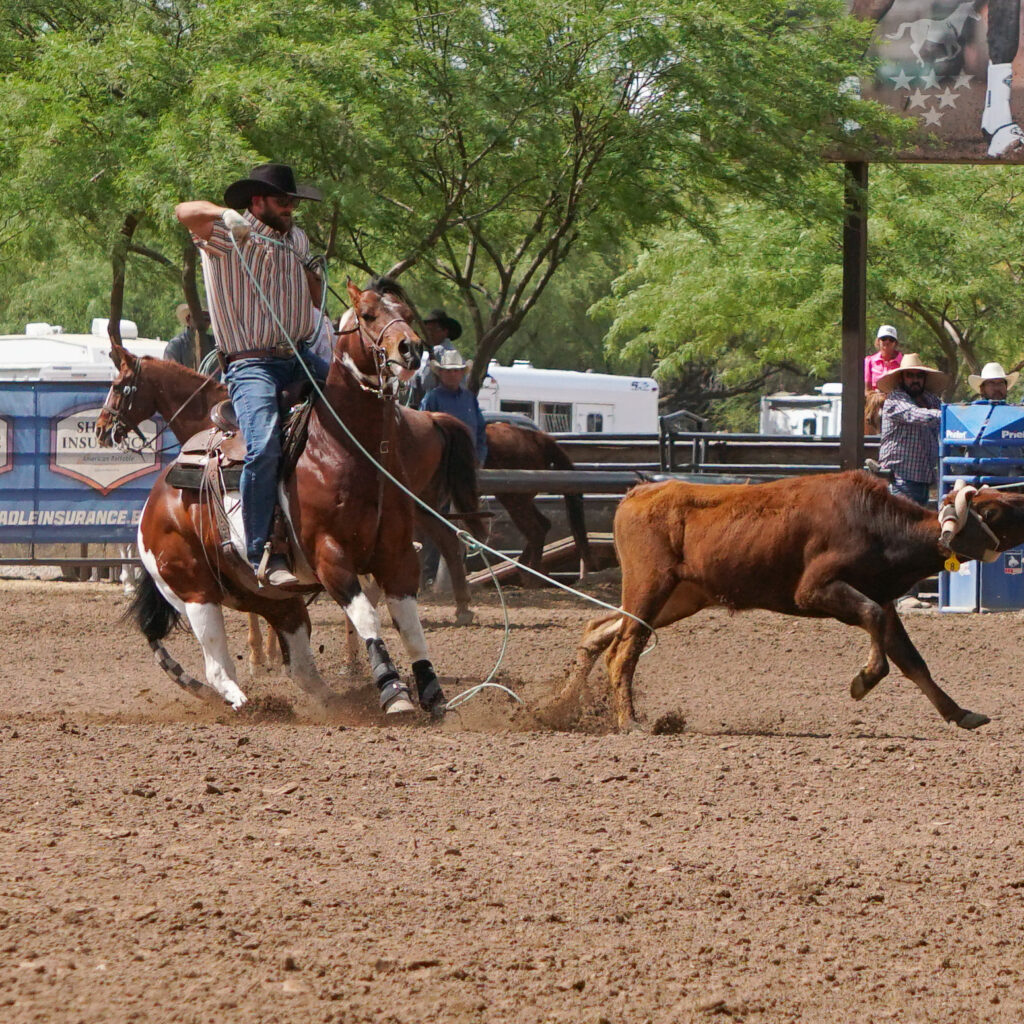
He keeps his reins short — shorter than most — because he doesn’t have a left hand to take up slack. His horse has to be where it needs to be before the delivery, not after. When he heels, he tucks his reins and coils into the crease of his elbow and focuses hard on making sure those coils lay flat and come off clean. He keeps his last coil slightly bigger to help them feed without binding up on themselves.
Balance has been a big focus. He works hard to stay square in the saddle, keep even weight in his stirrups, and not telegraph his delivery through his body. He watches video of himself. He pays attention to his horsemanship because he knows that when the horsemanship improves, the roping follows — the horse is just where it needs to be.
He qualified for accommodated handicap status, which would have allowed him to tie off. Tried it twice at a jackpot with the horse he had at the time, and they couldn’t find a consistent spot together. Threw the tie-off in the nose of the trailer and never touched it again. There’s also a little pride in it — he doesn’t want anyone to be able to say he had a leg up.
“I don’t want anybody to ever have a reason to say I had a leg up beating them.”
A Plot Twist Named Crystal
Here’s where his story and mine intersect, because you can’t tell Brian’s full story right now without this part.
New Year’s Eve 2024, I had my last drink ever — sick and done and completely over it. January 2025, I got sober. Middle of January, I got to Wickenburg. February 5th, Brian and I went on our first date.
He found me on Tinder. His profile had a roping picture and a pipeline flexing picture. I could tell he only had one hand but I wasn’t going to ask — so I just waited. One night the conversation died and he sent me a message: “FYI, I don’t have a left hand.”
I told him it didn’t look like it stopped him.
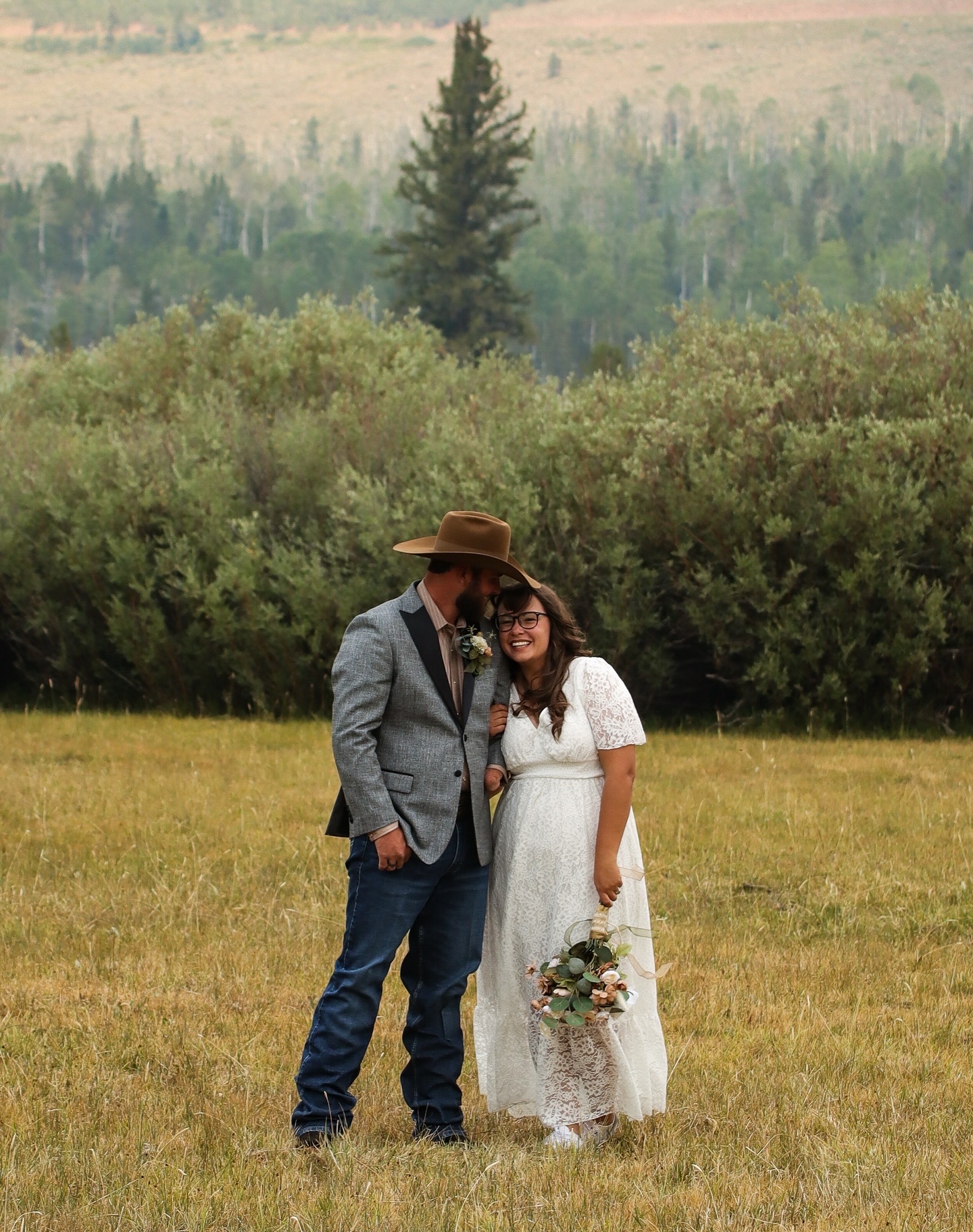
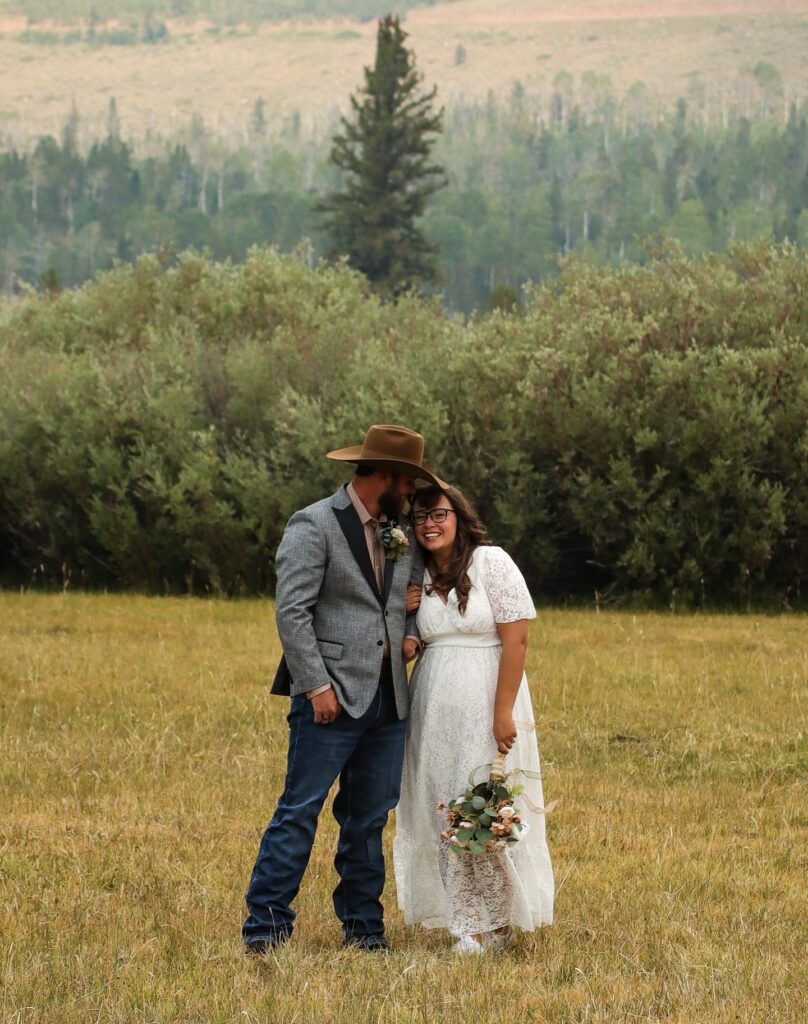
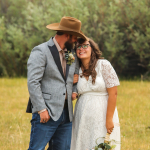
First date was five hours long, just talking. We eloped July 26th. Told almost nobody. The people who’d been around us both that winter weren’t surprised at all — they said they knew it was happening.
We joke that we could have crossed paths a dozen times before we met — same rodeos, same towns, same circles. But God apparently waited until we were both ready. Both sober. Both pointed the right direction.
Now we’re building a herd and going wherever the road takes us.
What He’d Tell You About Adversity
I asked Brian what advice he’d give to someone facing their own limitations. He sat with it for a second — because he genuinely doesn’t think about it much — and here’s what he said:
“I don’t know. I’ve never looked at something and been like, I can’t do that. Just go do it. There’s a way around it. It’s all in how much effort you want to put into it.”
He also said something I think is worth sitting with:
“I never had to overcome anything because I never had anything. Had somebody lost a hand — now that’s different. I feel for those folks. But I never lost anything. So everything’s normal.”
That perspective is everything. He didn’t lose something and have to grieve it and rebuild. He simply started from the version of normal that was his. He’s never spent a day mourning what wasn’t there because it was never there to miss.
He’s thought seriously about having a left hand exactly twice in his life — once playing basketball in high school, and once when he really thought about how much it would help his roping. Both times, the thought lasted about as long as it took to remember it’s not an option. So he moved on.
You get to choose your hard. It’s hard sitting at home wishing you could do something. It’s hard getting out there and figuring it out. Either way it’s hard. He chooses the version that goes somewhere.
Where Things Are Headed
Brian has goals in the roping pen — he wants to find a traveling partner, hit some World Series jackpots, maybe amateur rodeo down the road. He felt his roping turn a real corner this past year and it gave him confidence he hadn’t had before.
He’s currently learning to ride my cow horse stud — which is a very different horse than anything he’s been on — and the two of them have clicked in a way that’s been genuinely cool to watch. Next step is hauling him to town.
We’ve got young horses coming up, a new business getting off the ground, a church community pushing us both, and a life that looked nothing like what either of us planned twelve months ago.
That’s the thing about betting on the right person. You don’t always know where you’re going. But you know you’re not going there alone.
Brian Show is not going to call himself inspirational. He’s going to tell you to get off your butt and go do the thing. And honestly? That might be the most inspirational thing of all.
This episode of Horses Hope and Hustle is available now wherever you listen to podcasts. If it moved you, share it with someone who needs it.
Stay true. Stay tough. Keep hustling.
Author: Crystal Show
share to
most popular posts