Mare Breeding 101: What Every Horse Owner Should Know Before Breeding Season — with Dr. Steph White
June 15, 2026


Episode feature | Horses, Hope & Hustle Podcast
If you’ve ever wondered what your vet is actually looking for when she’s got her arm in your mare, or why breeding season feels like it takes three times longer and costs twice as much as you expected, this episode was made for you.
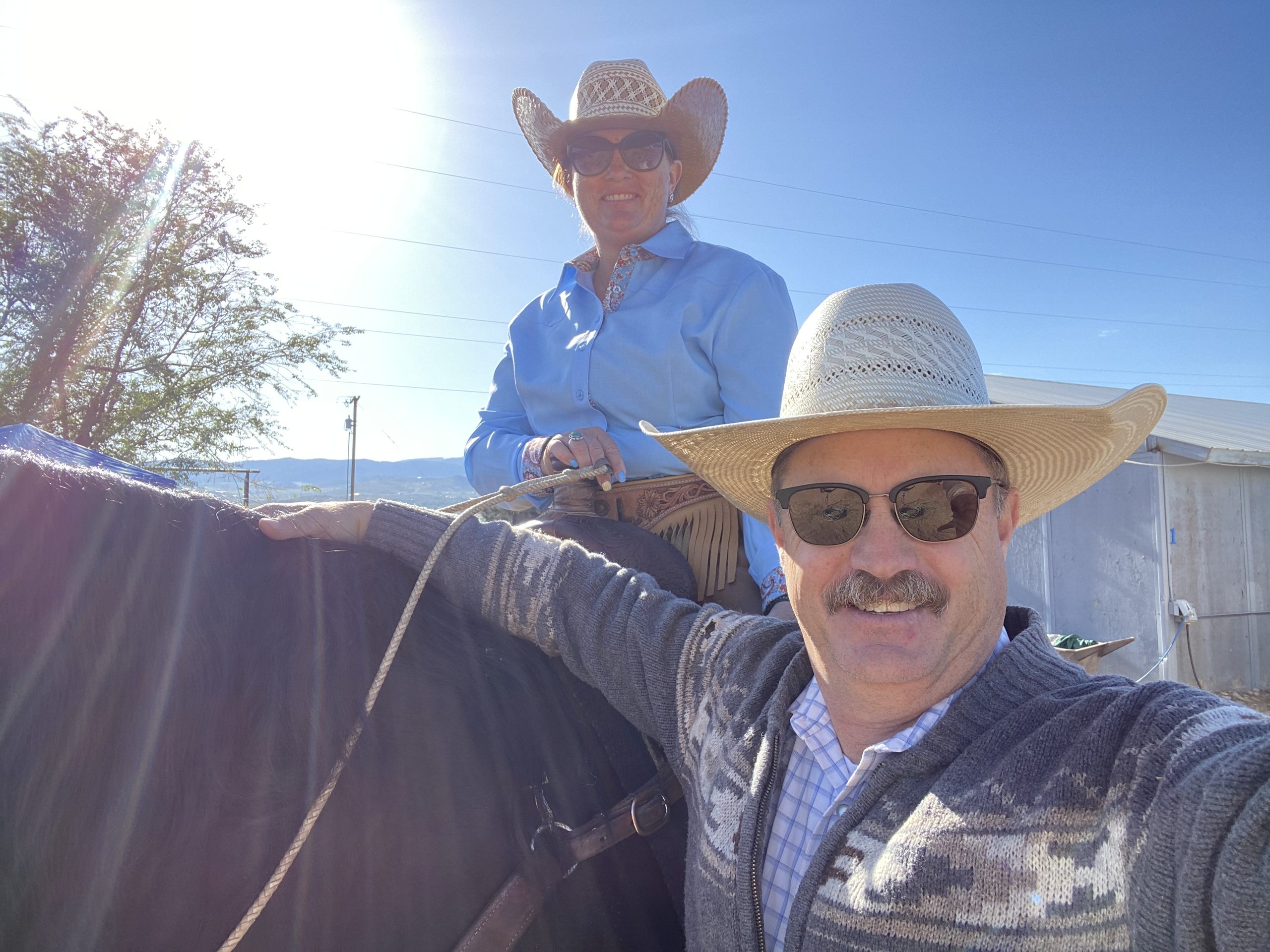
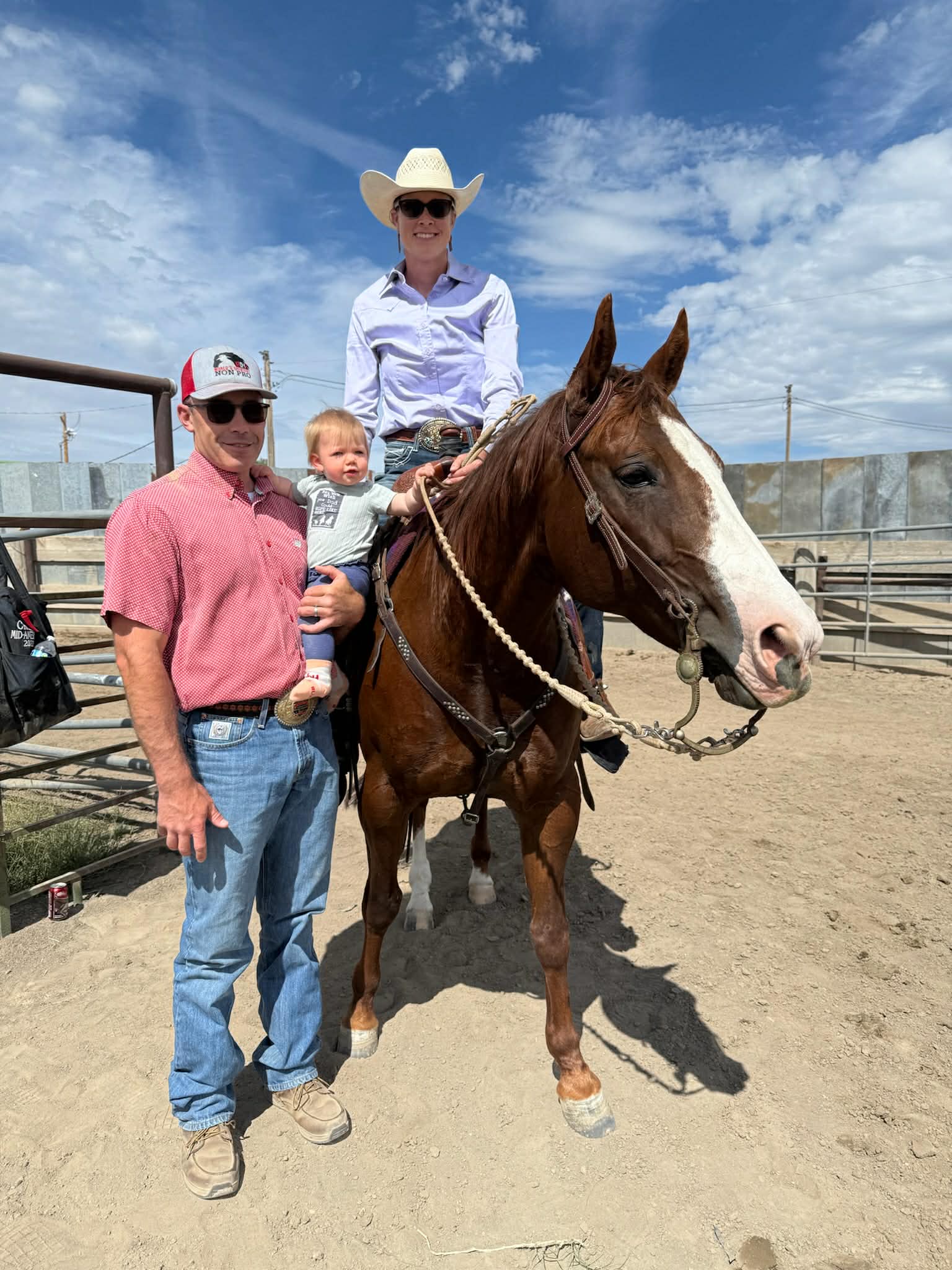
Dr. Steph White is an equine veterinarian and co-owner of a mixed animal practice in Cody, Wyoming. She graduated from Washington State University’s veterinary program ten years ago, spent time at the University of Wyoming for undergrad, and has been practicing in Cody since 2016 — buying the practice with her husband Reeves in 2019. Equine reproduction is her specialty and, by her own description, her “special kind of crazy.”
She’s also a cow horse competitor, which is how she and Crystal connected. And she is, in her words, absolutely never bored.
On this episode, Dr. White broke down mare breeding from the beginning — cycling, mare prep, what vets look for during exams, how and when semen is ordered, fluid management, and when to check for pregnancy. It’s one of the most practical and thorough conversations on equine reproduction available to the everyday horse owner. This blog captures the key points.
Before You Even Call Your Vet: Two Questions to Answer First
Dr. White starts every breeding conversation with two questions that have nothing to do with follicle size or semen quality. They’re logistical — and they determine everything that follows.
1. When do you want your foal born?
This matters more than most mare owners realize. If you’re producing a horse intended for age-specific competition — cow horse futurities, cutting futurities, or any event where birth date affects competitive maturity — then you want your foal born as early in the year as possible.
A horse born in late April competing against horses born in January is at a meaningful disadvantage. That’s months of physical and mental development, and in a futurity pen, it shows.
In northern Wyoming — where Dr. White practices — most mares don’t cycle naturally until mid to late April, sometimes into May. That’s a problem if you need a February or March foal. Which leads directly to her second question.
2. What are your foaling facilities?
“Horses are not cows.” Dr. White is clear about this. If you’re trying to produce an early foal but have no indoor facilities and you’re in Wyoming or Montana, you’re setting yourself up for a hard situation.
“Foals are very fragile and can often need very aggressive care in the very beginning. You don’t want to invest all of the time, money, effort, blood, sweat, and tears into making this happen and then be foaling outside in the middle of a snowstorm.”
If your goal is general horses that aren’t pointed at age-specific competition, foaling in late spring is perfectly reasonable — and it’s kinder to everyone, including the foal.
These two answers should shape every conversation you have with your vet before breeding season begins.
How to Get Your Mare Cycling Earlier: Lights, Masks, and Timing
Mares are long-day breeders. As daylight increases, their reproductive systems wake up. As daylight decreases, they shut down. That’s the core biology.
In northern climates, the swing between their most and least active reproductive periods is more dramatic. Mares in Wyoming aren’t getting the same consistent daylight cues that mares in Texas are getting in February.
The proven intervention is artificial light. Exposing a mare to sixteen hours of continuous light per day — either by putting her under barn lights or using an equilume mask — tells her brain to start cycling earlier.
The catch: you have to start sixty to seventy-five days before you want her cycling.
“If you’re sitting down to eat Thanksgiving dinner, your mares need to be under lights.”
If your goal is to start breeding in February, lights need to go on in mid to late November.
Dr. White also cautions against starting lights too early. Mares benefit from a true period of non-cycling (called anestrus) each year. Disrupting that natural rest too aggressively can affect how predictably they cycle when you need them to. The goal is a targeted jump-start, not year-round artificial cycling.
The Mare Exam: What Your Vet Is Actually Doing
When a mare comes in for a breeding soundness or pre-breed exam, there’s a lot more happening than most owners see. Dr. White walked through her full process.
History first. Is this a maiden mare? Has she had foals before? Were previous pregnancies normal? Did she carry to term? What happened? Reproductive history changes the approach significantly.
Whole body assessment. Is the mare in appropriate body condition? Thin mares lose reproductive efficiency first — it’s one of the first systems the body de-prioritizes when resources are limited. Has she been dewormed? Are her teeth current? Is there lameness to manage through pregnancy?
“The healthier the mare is from the inside out, the better her chances of producing a good oocyte and maintaining pregnancy.”
Vaccination timing. Dr. White prefers to vaccinate mares before breeding rather than after, specifically to avoid the scenario where a vaccine is administered in early pregnancy and then blamed if the pregnancy is lost.
External exam. Vulvar conformation matters. A recessed rectum or poor perineal conformation can cause contamination issues and affect the uterine environment. Some mares need a Caslick’s procedure — a simple surgical closure — to prevent this.
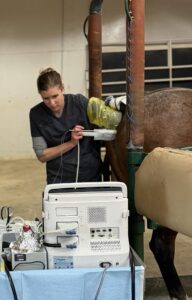
Rectal palpation. Before the ultrasound probe goes in, Dr. White palpates. She’s feeling the tone of the uterus, following each uterine horn to the ovary, assessing size and structures. This gives her a roadmap before she ever picks up the probe.
Ultrasound. She’s evaluating:
- Uterine cysts. These are common in mares of most ages. A few cysts usually don’t affect pregnancy. Many cysts can be a real problem — if the embryo can’t find cyst-free endometrium to implant against, it burns through its energy and fails. Severe cyst cases can be surgically addressed.
- Fluid. Fluid in the uterus is never a good sign and must be managed carefully around breeding. Causes include age, estrus-associated edema, infection (endometritis), and fibrotic cervix — one of Dr. White’s described frustrations. A fibrotic cervix doesn’t allow fluid to drain normally, requiring aggressive management.
- Edema. When a mare is in heat, the superficial uterine lining swells with fluid. On ultrasound this looks dark — darker tissue than the surrounding structures. Mares build different grades of edema; some build a lot, some barely any. Knowing what’s normal for a specific mare is part of good reproductive management.
- Follicles. The fluid-filled structures on the ovaries that contain the oocyte. As a follicle grows and becomes dominant, it’s working toward ovulation.
- Corpus luteum (CL). After a follicle ovulates, it becomes a corpus hemorrhagicum (CH) — essentially a pocket of bloody fluid — for about twelve to twenty-four hours, then organizes into the corpus luteum. The CL produces progesterone, which is what maintains pregnancy. No CL means the mare hasn’t cycled yet this season. A CL means she has.
Understanding the Mare’s Cycle
Mares cycle approximately every twenty-one days once they’re in season.
Of that cycle, roughly fourteen days are spent in diestrus — out of heat, under the influence of progesterone from the corpus luteum. The remaining seven days (give or take — it ranges from two to eight) are spent in estrus, or heat, when the follicle is growing and estrogen is building.
Behavioral signs of heat include: increased interest in geldings or stallions, frequent urination, winking, and a general attitude that some people describe as “spicy.” Not every mare shows these signs, though. Some mares cycle perfectly but show minimal behavioral changes. That’s not a problem — it just means you can’t rely on behavior alone.
Ordering Semen: The Timing and the Logistics
Getting semen to a mare at the right time is a coordination puzzle. Here’s how Dr. White approaches it.
When is the stallion collected? Some stations collect any day of the week. Many operate on a Monday-Wednesday-Friday schedule, or every other day. This information shapes everything else.
What size follicle can be induced? Once a dominant follicle reaches approximately thirty-five millimeters, it can be induced to ovulate with hormonal agents (most produce ovulation thirty-six to forty hours after administration).
The ordering call. Dr. White prefers to call the stallion station herself rather than having the client communicate directly with the station and the vet separately. She gets a stallion contract from the client and handles ordering, then keeps the client informed.
She also waits for confirmation that the semen has actually been collected and is in the box with a tracking number before giving the induction agent. Stallions have off days. FedEx routes have delays. Memorial Day weekends happen.
“There’s only so many variables you can control. Make sure the stud has been collected, it’s in a box, and you have a FedEx or UPS tracking number. Then give your induction.”
Fresh Cooled vs. Frozen Semen: What Changes
Fresh cooled semen stays viable in the mare for approximately twenty-four hours. Dr. White inseminates before ovulation, using the induction agent to tighten the timing window. As long as the mare ovulates within that twenty-four-hour window, timing is satisfactory.
Frozen semen requires more precision. The most fertile window for conception is six hours post-ovulation. With frozen semen — especially when only one dose is available, which is common — Dr. White aims to inseminate within that six-hour window.
“That six-hour window post-ovulation is prime time.”
That means monitoring the mare closely enough to catch ovulation in real time, which requires multiple ultrasounds in a day.
After insemination, Dr. White looks at semen quality under a microscope — but she breeds first, then checks. The reason: the sperm are already in the oviduct within minutes of insemination. Whether the quality looks good or bad on the slide doesn’t change whether they’ve already traveled where they need to go. What it does change is her interpretation if the mare comes back open.
“I’ve had cases where I didn’t see a single viable sperm and the mare was pregnant in days.”
Post-Breeding: Fluid Management
One of the most important and most overlooked parts of breeding management is what happens to the uterus after insemination.
Any insemination causes an inflammatory response. In most healthy mares with good semen, the uterus clears this naturally. In mares prone to post-mating induced endometritis — whether due to age, a fibrotic cervix, history, or other factors — fluid and inflammatory debris accumulate and can prevent embryo implantation.
Four to six hours post-insemination, Dr. White lavages mares that need it. At that point, sperm have already moved to the oviduct — they’re out of the uterus and exactly where they need to be for fertilization. Lavaging clears extender, dead sperm, and inflammatory byproducts from the uterine environment so it can support a pregnancy.
She also uses oxytocin in most mares after breeding to encourage uterine clearance — not just the problem cases.
“The best place for that semen to live is in the mare, not in the fridge. And the best environment for a pregnancy is a clean uterus.”
Pregnancy Diagnosis: What Happens at Day 14
The standard first pregnancy check is at day fourteen from ovulation. The reasons are practical:
- The embryonic vesicle is large enough to reliably visualize on ultrasound
- Day fourteen mimics the mare’s natural diestrus period — so if she’s open, she’s likely cycling into estrus again and can be rebred quickly
- Day sixteen to seventeen is when the embryo implants into the uterine wall, after which twin management becomes significantly more complicated
On twins: If the mare had multiple follicles and there’s any possibility of a double ovulation, checking between day fourteen and sixteen is important. Before implantation, embryonic vesicles can be manually pinched (reduced to one). After implantation — especially if they’re located next to each other — pinching becomes much harder and the risk of losing both increases.
“We really, in the perfect world, want to identify and pinch a twin before implantation happens.”
Heartbeat check typically happens around day twenty-five to thirty. Dr. White can sometimes detect a heartbeat as early as day twenty-one or twenty-two, but she prefers to wait for a well-established one before calling a pregnancy confirmed.
From there, follow-up checks at day forty-five to fifty, day ninety, and day one-twenty are common checkpoints — adjusted based on the mare’s history, the origin of the pregnancy, and whether there are specific concerns like a history of placentitis.
Embryo Transfer and Recipient Mares
Embryo transfer allows a high-value mare to produce multiple offspring in a single season — or allows a mare that can’t carry a pregnancy to still produce genetic offspring.
The donor mare is bred just as she would be if carrying her own foal, with the same attention to timing, fluid management, and semen quality. The difference is what happens on day eight: the embryo is flushed from the donor mare’s uterus and transferred to a recipient.
The recipient management is where it gets complicated — and where Dr. White says things can go sideways quickly.
Recipient quality matters more than most people realize. Body condition, age, reproductive history — all of the general health factors that apply to a donor mare apply equally to a recipient. A thin, old recipient mare is not a good investment.
“Just because the horse is affordable doesn’t mean it’s a good recipient.”
The ideal recipient has carried a foal before, is between four and ten years old, and is in good body condition. Maiden mares can work — Dr. White uses them — but there’s no data on their ability to mother, and aging uteri that haven’t carried a pregnancy have more pathology.
Syncing recipients with donors is one of the hardest parts. Recipients should ideally ovulate one to four days after the donor mare. In practice, getting two or three recipient mares synced to cycle in that window is a coordination challenge.
Dr. White recommends having two to three recipient mares per donor mare, because at least one is likely to fall out of sync, cycle early, or otherwise not cooperate.
“Sometimes it works great. Sometimes your recipient goes anovulatory and you have to bring everybody back together and it just takes time.”
Embryo transfer is expensive. It’s also remarkable when it works — and it works more often than many horse owners expect when the preparation is done right.
ICSI: The Next Level
ICSI (intracytoplasmic sperm injection) is a more advanced reproductive technology that allows a single sperm to be injected directly into an oocyte. It’s particularly useful when semen quantity is extremely limited, when sperm quality is poor, or when a mare can’t produce embryos through conventional flushing.
Dr. White touched on ICSI in the context of embryo quality: frozen ICSI embryos, in her experience, tend to perform better than conventionally frozen flushed embryos. If you’re planning to freeze embryos for future use, the technology and the specific method matter.
For a full deep-dive on ICSI, Dr. White is available for consultation through her practice — and this is a conversation to have before breeding season, not during.
The Honest Answer to Most Breeding Questions: It Depends
Dr. White is refreshingly direct about the limits of prediction in equine reproduction.
“I think my team probably gets so sick of it, and the clients get sick of it, because people ask me a question and my answer is always, ‘well, it depends.’ And here’s the litany of reasons why it depends.”
Biology doesn’t follow calendars. Mares that ovulate at forty-five millimeters one cycle ovulate at thirty-four the next. Stallions have off days. Packages get delayed. Embryos develop at different rates.
What reproductive management does is reduce the variables you can control, so the ones you can’t don’t sink you. The more preparation that goes into a breeding — healthier mare, better timed ovulation, cleaner uterine environment, properly synced recipient — the better the odds.
Nothing is guaranteed. But the preparation closes the gap.
Finding Dr. Steph White
Dr. Steph White practices at a mixed animal clinic in Cody, Wyoming, with a primary focus on equine reproduction. She is co-owner of the practice alongside her husband Reeves and currently has a team of four veterinarians.
If you’re in the region and looking for an equine vet who takes breeding seriously — and who will actually explain what she’s doing and why — Dr. White is worth the call.
About the Horses, Hope & Hustle Podcast
Horses, Hope & Hustle is a podcast for the western industry — breeders, trainers, competitors, and the entrepreneurs who’ve built their lives around horses. Each episode goes deep on real stories, real craft, and real business.
Listen wherever you get your podcasts and find all episodes, resources, and our western business directory at horseshopeandhustle.com.
Questions about breeding season? Drop them at horseshopeandhustle.com/contact and we’ll point you in the right direction.

Author: Crystal Show
share to
most popular posts