From the Ground Up: Rope Horse Trainer David Sharp on Building Horses, Building a Business, and Knowing Who You Are
June 15, 2026


Episode feature | Horses, Hope & Hustle Podcast
David Sharp doesn’t train rope horses because it’s a good business move. He trains them because at eight years old, he already knew this was his life — he just needed a few decades to fully understand it.
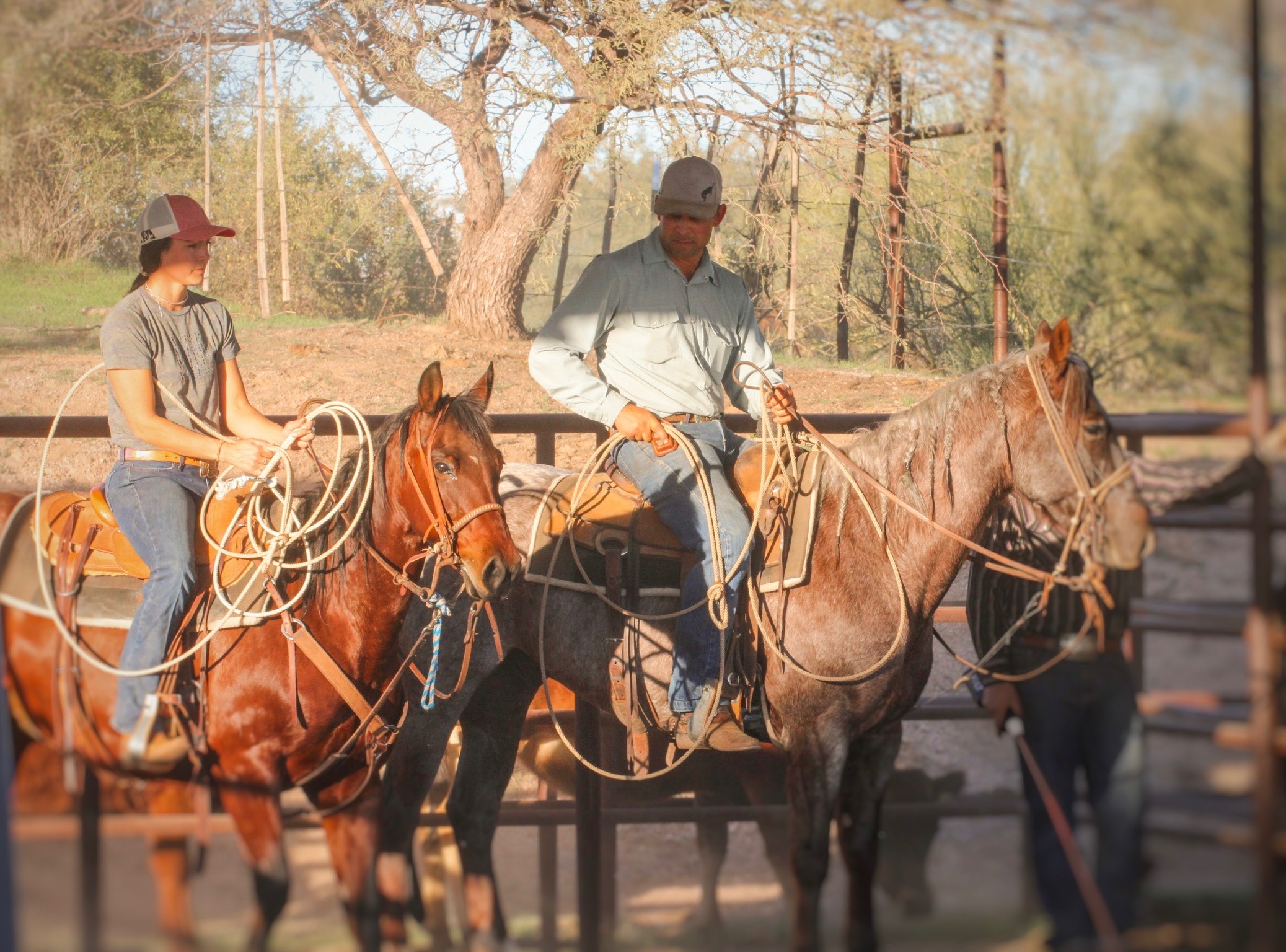
Based out of Dublin, Texas, David and his wife Taylor run Sharp Horses, a husband-and-wife training operation that specializes in rope horses and barrel horses. David focuses on the head horse side, Taylor on barrels, and together they’ve built a program grounded in patient horsemanship, honest communication with clients, and a commitment to making horses that are genuinely good — not just good enough for the show pen.
On this episode, David talked through everything from how he got started starting two-year-olds, to what it actually takes to get a horse ready for the rope horse futurity, to why the western industry needs more young people willing to do the work. This blog pulls out the most important takeaways from that conversation.
What Sharp Horses Does
Sharp Horses is a professional training operation in Dublin, Texas. David trains rope horses — primarily head horses — while his wife Taylor trains barrel horses. They take horses from colt starting all the way through the futurity pen and beyond.
Their program runs about fifteen horses at a time. David and Taylor handle everything themselves: feeding, grooming, conditioning, and riding. That level of hands-on involvement is intentional.
“We’re not caught up in numbers trying to get through them. We have enough that we can do a good job.”
They also compete, consign horses for sale — including at high-profile sales like Rancho Rio — and periodically take horses all the way from two-year-old starting to futurity competition. David is also a contributor on Horse Pro TV, where he shares his training process on camera.
How David Got Started: The Two-Year-Old Years
David grew up roping in his preteens, making his own horses out of necessity. His dad was methodical on the ground — not a flashy horseman, but careful, and he passed that patience on. David learned first saddlings, driving, and desensitizing before he ever thought about making it a profession.
When he moved to Texas about ten years ago, nobody was sending a new guy nice horses. So he rode whatever came his way — a lot of horses from Louisiana, Mississippi, and Arkansas — and he outworked the situation.
“Nobody really wants to send a really nice horse to a guy they don’t know that doesn’t have a reputation. I just had to ride what I could get.”
He clipped horses up, put tails up, taught them to open gates and walk over obstacles, then filmed it and sent it to clients. Word of mouth did the rest.
The two-year-old program was where he first found his footing. He built horses from the ground up, studied cow horse guys like Nick Dowers, Chris Dawson, and Matt Cook, watched slow-motion reels of reiners stopping, and listened to Rain Cow Horse podcasts while saddling. He didn’t wait for someone to teach him — he sought the information out.
Eventually, he got to train beside Slick Robinson, and that period changed him.
“It was like drinking out of a fire hydrant. He knew so much and was so good at explaining it to me. I owe a lot to that guy.”
What Age Do Rope Horses Come In — and What David Looks For
David typically works with three, four, and five-year-olds, though he still occasionally takes a well-bred two-year-old. He’s particular about it now.
Most horses coming to him at three have been started by someone else. The quality of that start varies significantly.
“Sometimes you’re riding behind people that don’t really know what we’re looking for as far as a rope horse goes. They’ve done the best job they thought they could, but it’s not necessarily what we need. You still need a couple months just to get them where you need them.”
Horses coming out of cow horse programs, in his experience, tend to arrive with the best foundation. And horses that have had a job outside — day working, ranch work — often make the transition easier.
“I think it’s really beneficial to them to have a job before they come to their pen. I think it matures them and it helps them quite a bit.”
Getting a Horse Ready for the Rope Horse Futurity
The rope horse futurity world has grown significantly in the last decade. When David moved to Texas, futurities barely existed in the rope world. Now they’re a legitimate competitive circuit — and preparing a horse for one requires a different level of discipline than most people realize.
David compares a talented four-year-old rope horse to a college football player who’s a physical freak but still mentally a kid.
“They can do stuff athletically at four that they probably shouldn’t be able to do yet. But it’s between their ears where you have to keep it together. That’s always the line you ride.”
Here’s how he approaches the prep:
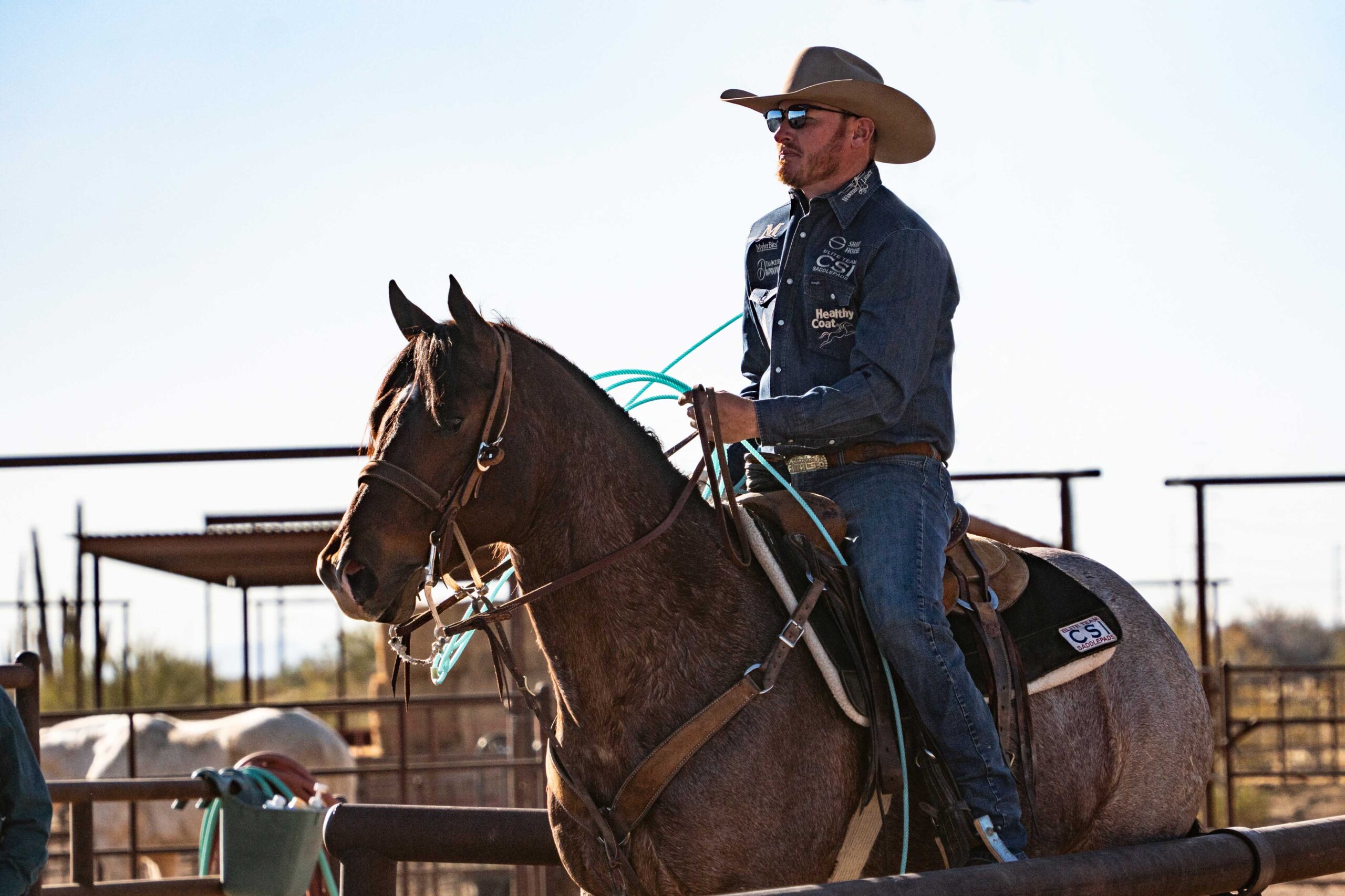
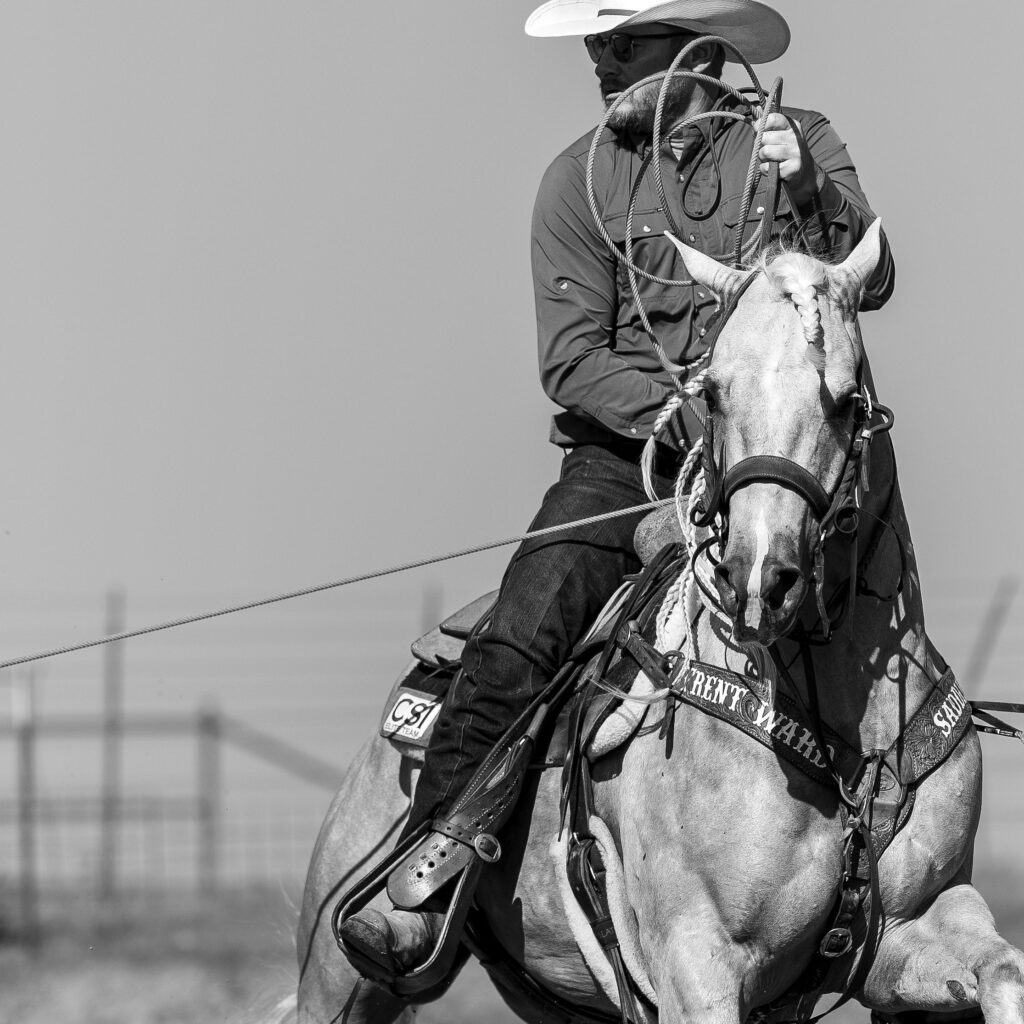
Breakaway roping and steer stopping. David uses breakaway roping with a breakaway honda — not a breakaway rope — to slow horses down and keep them thinking. Steer stopping does the same thing. Both tools let him go through the motions without asking for a horse’s maximum effort.
Score lanes. His buddy TJ Jones makes a score lane with steps, so steers don’t leave hard. David can send a horse through the motions at sixty percent — building the pattern without burning the horse’s mind up.
Quality over quantity. He doesn’t make run after run. If a horse needs several good runs to get to a place worth quitting, he’ll make those runs. But the goal is always to find a place to win and stop there.
Cross-training with Taylor. Some days a head horse gets loaded in the trailer and goes to a barrel pattern. Taylor camps out on them, moves their feet, keeps them athletic and focused without the pressure of roping. It sounds unconventional, but the concept is simple: give them a job that keeps them sharp without burning them out.
Letting them breathe. Young horses hold their breath in the box and through the run. Part of futurity prep is teaching them to exhale — mentally and physically.
“You’re trying to let them understand to breathe through it. This is where to put your feet, this is what you do. That’s a big part of it.”
Pre-futurity pin roping. The night before his first futurity, David hauled to a friend’s place and pin roped on his horse — just let him follow a cow around the arena, easy and quiet, no pressure. After weeks of tuning and refining, the horse needed something low-key. That horse won the limited reserve world championship.
“A lot of it is knowing your horse. What does it need? That’s my job as a trainer.”
Husband and Wife, Same Philosophy
One of the things that makes Sharp Horses unusual is how well David and Taylor’s programs align. They put the same foundation on horses regardless of discipline — and they ride behind each other regularly.
“She could get on a two-year-old or three-year-old that I’d been on and pattern them. By the end of the week they’re ready to go exhibition.”
Some couples in the horse world operate two separate camps under one roof. That’s not the Sharp model. They share methods, help each other warm up horses, haul together, and genuinely trust each other’s horsemanship.
That doesn’t mean there’s never friction.
“There are times when that 350-foot arena is way too small. But neither one of us are hot-headed. We’re grateful for what we get to do. One of us is going to apologize — it could be either of us — and we don’t want to let it affect the rest of the day.”
David credits their shared philosophy — the same foundation, the same goals, the same love of the horse — as a significant reason the partnership works.
The Hard Days
When Crystal asked David what gets him through the hard days, his answer wasn’t about mindset tactics or morning routines. It was simpler than that.
“When I was eight, I had it figured out. I liked cowboy stuff. I liked being outside. I liked being with my brothers. And then you get to be about ten or twelve and you figure out girls and being cool. It took me decades to realize I had it figured out at eight.”
When you know who you are, the hard days don’t shake your foundation. They’re just hard days.
“This is what I’m put here to do. When you know that, a hard day is just what it is. That doesn’t mean every day is going to be like that. And that doesn’t mean the next horse is going to be like that.”
Advice for Anyone Wanting to Get Into This Industry
David has a lot to say to young people considering a career in the rope horse world — or in horse training generally. The short version: get around good people as fast as you can, and be worth having around when you do.
“As soon as you can, go to work for somebody good. And when I say good, there’s a lot of good guys that maybe wouldn’t be the best to work for because they don’t explain it well or they don’t have time to slow down and teach. You need somewhere you can ask questions.”
He also pushes back on the idea that you need a formal credential or a fancy setup to start. The information is out there — online, on podcasts, on subscription platforms like Horse Pro TV.
“If you want to be a good horse trainer, you’ve got no excuse anymore. It’s online and a lot of it’s free. A thirty or fifty dollar subscription to something is way cheaper than going to a jackpot, and you’re going to learn a lot more.”
And once you’re in a barn learning from someone: put your phone away. Show up early. Stay late. Be present.
“If you’re that guy or girl doing that, it may take a couple of years, but they’re going to invest in you. You’re not going to just be an employee. You’re going to be a student.”
He also makes a pointed observation about the current two-year-old market:
“There is a huge hole in the two-year-old deal right now in the rope horse world. And in the barrel horse world too. The quality that’s out there is not great. If you were a kid and you wanted to do well at that and get after it, there is a spot for you. Go out there and learn it.”
What’s Coming Up for Sharp Horses
At the time of recording, David and Taylor have a standout palomino Frenchman Guy head horse — Frenchie BR — in the Rancho Rio sale. He’s a six-year-old with exceptional foot speed, and a professional heel horse roper recently got on him for the first time and smoked a run. David describes him as the real deal.
David is also planning to futurity the Fling and Roses colt he and Taylor have been developing, since Taylor has decided to wait until his five-year-old year on the barrel side. They have a new three-year-old by Sting, out of a Smart Chic Olena daughter, just coming into the program — a “flashy dude” they’re excited about for futurity work and eventual sale.
Follow Sharp Horses on Facebook (Sharp Horses), Instagram (@sharp_horses), and TikTok (Sharp Horses) to watch these horses develop in real time.
About the Horses, Hope & Hustle Podcast
Horses, Hope & Hustle is a podcast for the western industry — trainers, breeders, barrel racers, team ropers, cow horse competitors, and the business owners who build their lives around horses. Each episode goes deep on the stories, the craft, and the work ethic behind people doing this for real.
Listen wherever you get your podcasts and find us at horseshopeandhustle.com.
Have a story worth telling? Know someone who should be on the show? Reach out at horseshopeandhustle.com/contact.
Author: Crystal Show
share to
most popular posts